Visit Innatefit1.com for exercise wear and equipment!!!

You Are Not Starting Over — You Are Getting Smarter About the Process
Most fitness results fail because they are built on motivation rather than identity. This guide breaks down the psychology behind the restart cycle, emotional barriers, and how to build lasting workout habits that do not depend on willpower or perfect conditions to survive.
WOMEN'S HEALTHSELF-HELPBEGINNERS FITNESS TIPSMINDSETMEN'S HEALTHPERSONAL DEVELOPMENTHEALTH
Joseph Battle
5/2/20266 min read


Why Every "Fresh Start" Feels Like Failure
Let’s be honest for a second. You have been here before. The new gym membership, the meal-prepped containers stacked neatly in the fridge, the motivation that felt bulletproof on Day 1. Then, somewhere around Week 3 or 4, life happened.
The progress slowed down. The mirror stopped cooperating. You scrolled past someone’s “six-week transformation” post and suddenly felt like you were doing everything wrong. Sound familiar?
Here is what nobody tells you: that cycle you keep repeating is not a character flaw. It is actually a very predictable, very human response to an incredibly misunderstood process. The restart is not proof that you are broken. It is proof that you were sold a body-transformation version that was never built to last in the first place.
The goal of this article is to change how you think about the entire journey — not with cheerleader energy or hollow motivation quotes, but with a real, honest, evidence-backed perspective that actually respects your intelligence.
The Restart Cycle: Why Your Brain Keeps Pulling You Back to Square One
Understanding why fitness results do not last starts with understanding how motivation actually works. Most people begin a transformation fueled by emotional energy — frustration, an upcoming big event, or a photo they did not like. That kind of motivation is powerful, but it burns fast.
Neuroscience calls this the dopamine spike of novelty. Your brain rewards new behavior with a chemical rush that makes everything feel possible. But novelty always wears off. When it does, the effort stays the same, but the emotional reward disappears. That is not a weakness. That is biology.
Furthermore, the fitness industry has aggressively marketed the idea that transformation is a 30, 60, or 90-day event. Challenge programs, dramatic before-and-after photos, and countdown timers create a psychological framework that tells your brain there is a finish line.
When you cross it — or when you do not — the structure disappears. Without a structure to follow, the behaviors collapse. The restart cycle is not about a lack of willpower. It is about building a process on a foundation that was never designed to hold long-term weight.
The Invisible Progress Problem: When Your Body Changes Before You Can See It
One of the most damaging emotional barriers in any transformation journey is the period when nothing seems to be working. You are training hard. You are eating better than you were three months ago. But the scale has not moved, the mirror looks the same, and your patience is running dangerously thin. This is the stage where most people quit — and it is also the stage where the most important changes are actually happening.
Your cardiovascular system is becoming more efficient. Your muscle fibers are building new capillary networks. Your hormonal regulation is stabilizing. Your gut microbiome is adapting. These are real, measurable, physiological changes — they just do not show up in a selfie. The problem is that we have trained ourselves to measure progress through optics rather than function.
Consequently, we miss the evidence that the process is working, and we interpret silence as failure. Shifting your tracking system — even slightly — toward performance markers, energy levels, sleep quality, and strength gains can completely reframe what "progress" means to you.
Comparison Is the Thief of Your Specific Timeline
The comparison trap is one of the most underestimated obstacles in the mindset for body transformation. Social media has created a highlight reel culture where you are constantly consuming the best moments of other people's journeys while living in the middle of your own messy, unfiltered one. That is not a fair fight. It was never designed to be.
Beyond the emotional damage of constant comparison, there is a critical biological reality that most fitness content ignores entirely: your body has its own transformation timeline shaped by your genetics, hormonal profile, sleep patterns, stress load, and training history.
Someone else’s six-week progress photo reflects their unique biology, likely years of prior training, and often lighting, posing, and dehydration strategies you are not seeing. Comparing your Week 4 to someone else’s edited highlight is not motivating — it is physiologically inaccurate. Transition away from using other people’s timelines as your benchmark and start building a personal progress language that actually speaks to your specific body.
Discipline Is Not the Opposite of Enjoyment — It Is the Architecture of It
There is a common misconception that discipline means suffering. That fitness consistency when motivation is low requires grinding through workouts you hate, eating food that makes you miserable, and white-knuckling your way to a body you want. That model does not just fail emotionally — it fails scientifically. Adherence research in behavioral psychology consistently shows that sustainable behavior change requires positive reinforcement loops, not prolonged discomfort.
Discipline, in its truest and most effective form, is actually about building a system that removes the need for constant motivation. It means choosing training styles you genuinely like over ones you think you should do. It means constructing a nutrition approach that fits your actual life rather than a perfect version of it.
Moreover, it means designing your environment so that the healthy choice is the easier choice. When discipline is built intelligently, it stops feeling like restraint and starts feeling like momentum. The goal is not to love every workout — it is to build a structure so reliable that skipping becomes the harder option.
How to Create Lasting Workout Habits Without Relying on Willpower
Here is a truth that behavioral scientists have known for years: willpower is a finite resource. It depletes throughout the day, under stress, and with decision fatigue. If your workout plan requires you to summon maximum willpower every single day, it will eventually fail — not because you are weak, but because you are human. How to create lasting workout habits is less about motivation and more about architecture.
Habit formation research, including work on cue-routine-reward loops, confirms that durable habits are anchored in existing behaviors and environmental triggers. This means scheduling your workouts at the same time each day, attached to an existing routine like waking up or finishing work.
It means laying out your gym clothes the night before, or sleeping in them. It means making the entry point to your habit as friction-free as possible. Additionally, habit stacking — pairing a new behavior with an established one — dramatically increases the likelihood that the behavior sticks without requiring daily motivation. Habits that last for body transformation are not built on inspiration. They are engineered through repetition, context, and smart environmental design.
Identity Over Outcome: The Shift That Actually Changes Everything
This is where the real work begins. Most people approach body transformation as an outcome they want to achieve: lose 20 pounds, see their abs, fit into a specific size. Outcomes are not bad goals, but they make terrible anchors for long-term behavior change. Here is why — the moment you reach the outcome, or fail to reach it on schedule, the behavioral motivation evaporates. The outcome was always the ceiling, never the foundation.
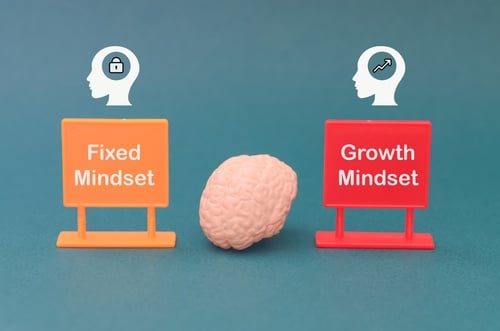
The psychological shift that separates people who maintain their results from those who return to old patterns is this: they stopped pursuing a body and started building an identity. Instead of “I am trying to lose weight,” the inner narrative becomes “I am someone who trains consistently and fuels my body well.” That is not a semantic trick. Identity-based behavior is neurologically more durable because it is tied to self-perception rather than a finish line.
When actions align with who you believe you are, consistency becomes an expression of integrity rather than an act of discipline. Furthermore, setbacks — which will absolutely happen — no longer represent failure. They become temporary inconsistencies in an otherwise solid identity, and that distinction changes everything about how quickly you recover and keep going.
The Long Game: Why Sustainable Transformation Is the Only Kind Worth Building
The most honest thing anyone in the fitness industry can tell you is this: there is no version of lasting body transformation that happens fast and sticks forever. The body you are building is not a 90-day project. It is a lifelong system that evolves with your age, schedule, stress, and priorities. That is not discouraging — it is actually liberating. When you remove the artificial deadline, you remove the failure condition that keeps triggering the restart cycle.
Sustainable transformation is built in the boring, consistent, unremarkable weeks where nothing dramatic happens. It is built in the decision to train on a Wednesday when you are tired rather than waiting for a Monday motivation reset.
It is built into the meal that is 70% aligned with your goals on a busy Thursday, not the perfect diet you only maintain for three weeks. Transition your definition of success from dramatic before-and-afters to the quiet, powerful fact that you are still in the game months and years later. That staying power — that refusal to quit when the excitement fades — is the actual transformation. Everything else is just the visible side effect.