Visit Innatefit1.com for exercise wear and equipment!!!
Unleash Your Strength Anywhere: 8 Powerful Benefits of Resistance Bands for Home Workouts
Discover 8 powerful benefits of resistance bands for at-home workouts—from joint-friendly training to progressive resistance. Learn why elastic resistance bands outperform weights in versatility, portability, and muscle activation for all fitness levels!
SELF-HELPBEGINNERS FITNESS TIPSWORKOUTSFITNESS TIPSWOMEN'S FITNESS TIPSSTRENGTH TRAININGEQUIPMENT SUGGESTIONS
Joseph Battle
12/4/20256 min read


Introduction
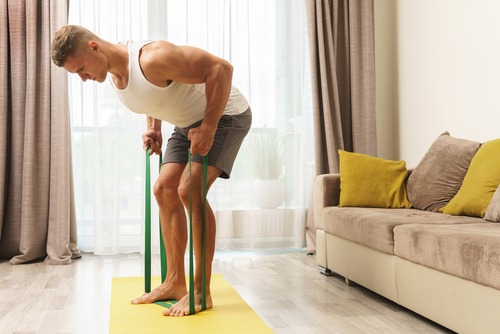
Strength training doesn’t require a crowded gym or bulky equipment. With resistance bands, you can sculpt, tone, and strengthen your body from the comfort of your living room. These elastic powerhouses offer a dynamic alternative to traditional weights, delivering joint-friendly workouts, unmatched versatility, and progressive resistance—whether you're a beginner or a seasoned athlete.
If you’ve ever dismissed elastic resistance bands as "too simple" for serious fitness gains, think again. From improved muscle activation to portability, these bands pack a punch that dumbbells and machines can’t always match. Below, we dive into eight compelling advantages of resistance bands over weights and why they deserve a permanent spot in your at-home workouts.
Affiliate Disclaimer: This article may include affiliate links for fitness and wellness products such as supplements, workout gear, home exercise equipment, and related tools. If you decide to make a purchase through one of these links, I may earn a small commission—at no extra cost to you. I only recommend products that I find genuinely useful, practical, and aligned with a healthier lifestyle.
Joint-Friendly Fitness: Train Hard Without the Wear and Tear
One of the standout elastic resistance band benefits is their ability to provide a low-impact yet highly effective workout. Unlike heavy weights, which can strain joints—especially for those with arthritis, past injuries, or mobility limitations—resistance bands create smooth, controlled tension throughout each movement. This reduces the risk of joint stress while still challenging your muscles. Heavy Bands.
Moreover, resistance bands allow for natural movement patterns. Free weights often force rigid motions (like a strict bicep curl), but bands adapt to your body’s range of motion. This makes them ideal for rehabilitation exercises, senior fitness, and anyone prioritizing long-term joint health. Whether you’re recovering from an injury or simply want to train smarter, bands let you push your limits without the punishment.
Portability Perfection: Take Your Gym Anywhere, Anytime
Gone are the days of lugging around heavy dumbbells or searching for a gym on vacation. Resistance bands weigh next to nothing and can fit into a small bag, drawer, or even your pocket. This unmatched portability means you can squeeze in a workout whether you’re traveling, at the office, or in a tiny apartment. No excuses—just results.
Beyond convenience, this portability encourages consistency. Studies show that the easier it is to access your workout tools, the more likely you are to stick with them. With bands, you eliminate barriers like commute time, gym fees, or equipment setup. Whether you’re doing a quick hotel room workout or a full-body session in your backyard, at-home workouts become effortless—and that’s a game-changer for long-term fitness success. Wrist Roller.
Progressive Resistance: Grow Stronger Without Buying New Weights
One of the most underrated advantages of resistance bands over weights is their scalability. With dumbbells, you’re limited by the weights you own—once you outgrow them, you need to buy heavier ones. Bands, however, allow for infinite resistance adjustments simply by changing your grip, stance, or band tension. A single band can mimic the challenge of multiple dumbbell weights.
Here’s how it works: The farther you stretch a band, the greater the resistance. For example, a light band can feel like 5 pounds at minimal stretch but 20+ pounds when fully extended. This progressive resistance makes bands perfect for both beginners and advanced users. Start with basic moves, then increase intensity by shortening the band, using a thicker one, or combining multiple bands. No plate loading required—just adaptable, ever-evolving strength training.
Full-Body Versatility: One Tool, Endless Exercise Possibilities
If you think resistance bands are only for arm curls, think again. These elastic wonders can target every major muscle group—from legs and glutes to back and core—with just a few simple adjustments. Unlike machines that lock you into fixed movements, bands allow for multi-planar exercises, engaging stabilizer muscles for better functional strength.
Here’s a snapshot of their versatility:
Lower Body: Banded squats, glute kickbacks, and lateral walks activate your legs and booty more effectively than bodyweight alone.
Upper Body: Mimic rows, chest presses, and shoulder raises with constant tension, unlike dumbbells that rely on gravity.
Core & Mobility: Use bands for anti-rotation exercises, assisted stretches, and even Pilates-inspired movements.
The best part? You can combine bands with other equipment (like yoga mats or stability balls) for hybrid workouts that keep your routine fresh. Whether you’re into HIIT, strength training, or rehab, bands adapt to your goals—not the other way around. Glute Bands.
Enhanced Muscle Activation: Why Bands Beat Weights in Key Movements
Ever notice how dumbbells feel easiest at the top of a lift (thanks to gravity), but resistance bands stay challenging throughout? That’s because bands provide variable resistance, meaning tension increases as the band stretches. This constant load forces your muscles to work harder during both the concentric (lifting) and eccentric (lowering) phases, leading to greater muscle activation.
Research confirms this: A study in the Journal of Strength and Conditioning Research found that elastic resistance bands can match or exceed the muscle engagement of traditional weights in exercises like squats and rows. Additionally, bands recruit more stabilizer muscles because they require you to control the movement against unpredictable resistance—unlike the fixed path of a machine. The result? Better muscle balance, improved coordination, and faster strength gains.
Cost-Effective & Space-Saving: A Home Gym That Won’t Break the Bank
Let’s talk numbers. A full set of dumbbells can cost hundreds of dollars and take up half a room. Resistance bands, on the other hand, deliver similar (or better) results for a fraction of the price—often under $50 for a high-quality set. This budget-friendly approach makes strength training accessible to everyone, regardless of income or living space.
Beyond affordability, bands eliminate clutter. No need for a dedicated gym corner—just hook a band to a door, wrap it around a pole, or step on it for instant resistance. This space-saving benefit is a lifesaver for apartment dwellers, frequent movers, or minimalists. Plus, with no heavy equipment to maintain, you’ll save on long-term costs like gym memberships or weight repairs. It’s a smart investment in both your fitness and your wallet. Band Anchor.
Perfect for All Fitness Levels: From Beginners to Elite Athletes
Whether you’re new to strength training or a seasoned lifter, resistance bands meet you where you are. Beginners appreciate the gentle learning curve—bands help master form without the intimidation of heavy weights. Meanwhile, advanced users can amplify bodyweight exercises (like pull-ups or push-ups) or use bands for explosive power training (think banded sprints or plyometrics).
Even professional athletes swear by bands for:
Warm-ups & Mobility: Dynamic stretches with bands increase blood flow and reduce injury risk.
Rehab & Prehab: Physical therapists use bands to strengthen weak areas post-injury.
Sport-Specific Training: Baseball players use bands for rotator cuff strength, while runners improve hip stability with lateral band walks.
This adaptability ensures that no one outgrows resistance bands—they simply evolve with your fitness journey.
Core Engagement & Functional Strength: Train for Real-Life Movements
Unlike isolated machine exercises, resistance band workouts mimic real-world movements, making them ideal for functional fitness. Every pull, press, or rotation with a band engages your core to stabilize your body against the unpredictable resistance. This translates to better posture, reduced back pain, and improved athletic performance.
For example:
Banded woodchoppers strengthen your obliques for rotational sports (golf, tennis).
Standing rows improve postural muscles, counteracting desk job slouching.
Single-leg deadlifts with bands enhance balance and hip stability for daily activities.
By training movement patterns (not just muscles), you build strength that actually applies to your life—whether you’re lifting groceries, playing with kids, or excelling in sports.
Final Thoughts: Why Resistance Bands Are a Non-Negotiable for Home Workouts
From joint-friendly training to portable, progressive resistance, resistance bands offer a smarter, more efficient way to build strength at home. They outperform weights in versatility, cost, and muscle activation while adapting to any fitness level. Whether you’re short on space, time, or budget, bands remove the barriers to consistent, effective workouts.
So, if you haven’t already, grab a set of elastic resistance bands and experience the difference for yourself. Your body (and your wallet) will thank you.