Visit Innatefit1.com for exercise wear and equipment!!!

The Ultimate Cable Fly Mastery: Sculpt Your Chest with Precision Angles & Pro Techniques
Master the cable fly for a bigger chest! Learn high-to-low, low-to-high, and neutral variations, perfect technique, tempo tips, and chest hypertrophy training strategies in this complete.
BEGINNERS FITNESS TIPSWORKOUTSCHEST TRAINING DEVELOPMENTFITNESS TIPSHYPERTROPHYSTRENGTH TRAINING
Joseph Battle
7/12/20266 min read

Why Cable Flys Are the Secret Weapon for Chest Development
When it comes to building a well-defined, powerful chest, most lifters default to bench presses and push-ups. While these compound movements are undeniably effective, they often fall short in one critical area: isolation. This is where cable chest exercises shine.
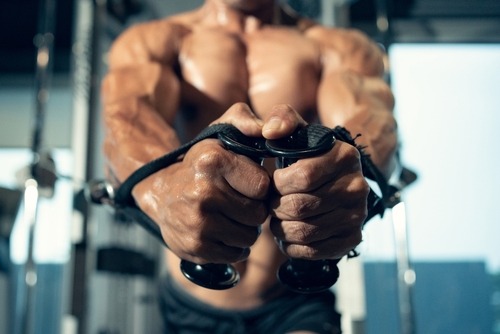
Unlike free weights, cables provide constant tension chest exercise throughout the entire range of motion, eliminating the "rest points" that occur with dumbbells or barbells. The result? Superior pectoral muscle development and the ability to target specific areas of the chest with surgical precision.
The cable fly—in its various forms—is one of the most effective chest isolation movements for sculpting a full, balanced chest. Whether you're aiming for upper-pec definition, lower-pec thickness, or a deep sternal groove, mastering the cable fly setup and its variations will take your chest hypertrophy training to the next level. In this guide, we’ll break down the science, technique, and programming strategies to help you maximize every rep.
Decoding Cable Fly Variations – Which Angle Hits What?
Not all cable flys are created equal. The beauty of this exercise lies in its adaptability—by adjusting the cable height and your body position, you can shift emphasis to different regions of the pectorals. Here’s a breakdown of the three primary cable chest exercises and how they influence muscle activation.
High-to-Low Cable Fly: Carving the Upper Chest
The high-to-low cable fly is a game-changer for developing the clavicular head of the pectorals (upper chest). By setting the cables at shoulder height or above and driving your hands downward in a diagonal motion, you create a strong stretch and contraction in the upper fibers. This variation is particularly valuable for lifters struggling with a lagging upper chest, as it mimics the movement pattern of an incline press while maintaining constant tension.
To execute this effectively, position the pulleys at their highest setting. As you bring your hands together in front of your waist, focus on squeezing the upper pecs rather than simply moving the weight. Avoid excessive forward lean, as this can shift tension away from the chest and into the shoulders.
Low-to-High Cable Fly: Building the Lower Pecs
If your goal is a thick, defined lower chest, the low-to-high cable fly is your go-to. By starting with the cables at waist level (or slightly below) and driving your hands upward, you emphasize the sternal head of the pectorals. This movement is excellent for creating that coveted "shelf" look at the bottom of the chest, often underdeveloped in lifters who rely too heavily on flat bench presses.
Maintain a slight forward lean to enhance the stretch in the lower pecs, but be cautious not to overarch your back. The key is controlled movement—rushing the reps will reduce time under tension and limit hypertrophy.
Neutral Cable Fly: The Balanced Chest Builder
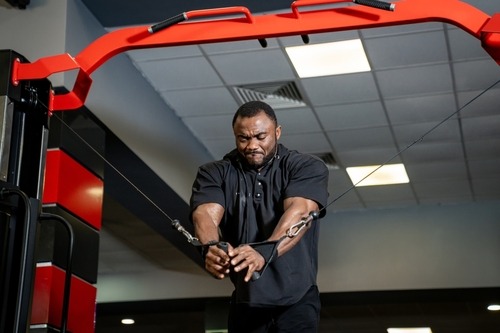
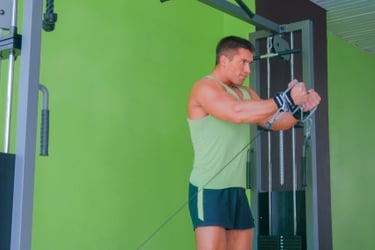
For overall pectoral muscle development, the neutral (or mid-level) cable fly is a staple. With the pulleys set at chest height, this variation targets the mid-pec fibers while still engaging the upper and lower portions to a degree. It’s ideal for lifters looking to add mass and symmetry without overemphasizing one area.
The neutral fly also allows for greater stability, making it a great choice for beginners perfecting their cable fly setup. Keep your elbows slightly bent and focus on a deep stretch at the start of each rep, followed by a powerful contraction at the midpoint.
Perfecting Your Technique – The Difference Between Growth and Injury
Even the best chest isolation movements can fall flat—or worse, lead to injury—if performed with poor form. The cable fly is deceptively simple, but small adjustments in body positioning can make or break its effectiveness. Here’s how to nail the technique for every variation.
Body Positioning: Stability is Non-Negotiable
Regardless of the cable chest exercises you choose, your stance and posture are critical. Start by setting the pulleys to the appropriate height for your chosen variation. Stand with a split stance (one foot slightly forward) or a staggered stance to improve balance and prevent swaying. Your torso should remain upright or slightly leaned forward—never rounded— to protect your shoulders and keep tension on the pecs.
A common mistake is allowing the elbows to flare out excessively. While a slight bend is necessary, letting your elbows drift too far back shifts the workload to the front delts. Instead, imagine hugging a tree—your arms should follow a natural arc that keeps the chest engaged throughout.
Movement Execution: Control Over Speed
The cable fly is not a power movement. Unlike a bench press, where explosive concentric (lifting) phases are beneficial, chest hypertrophy training with cables thrives on slow, controlled reps. Begin each rep with your arms extended, feeling a deep stretch in the pecs. As you bring your hands together, focus on squeezing the chest muscles rather than just moving the weight.
At the peak of the contraction, hold for a brief pause (1-2 seconds) before slowly returning to the starting position. This time under tension is what drives muscle growth. Avoid locking out your elbows at the stretch position, as this can reduce tension on the pecs and increase joint stress.
Tempo Training – The Hidden Key to Maximum Chest Growth
Tempo is often overlooked in chest isolation movements, but it’s one of the most powerful tools for accelerating pectoral muscle development. By manipulating the speed of each phase (eccentric, concentric, and isometric), you can increase muscle damage, metabolic stress, and mechanical tension—all critical drivers of hypertrophy.
The Ideal Tempo for Cable Flys
For general chest hypertrophy training, a 3-1-2 tempo works exceptionally well. This means:
3 seconds for the eccentric (stretching) phase (arms moving outward).
1-second pause at the peak contraction (hands together).
2 seconds for the concentric (squeezing) phase (arms moving inward).
This tempo ensures constant tension chest exercise while minimizing momentum. For advanced lifters, experimenting with slower eccentrics (4-5 seconds) can further enhance muscle damage and growth.
When to Go Faster (or Slower)
While controlled reps are the gold standard, there’s a time and place for tempo variation. Faster concentric phases (1 second) with a slow eccentric (3-4 seconds) can be used to increase metabolic stress, particularly in high-rep sets (12-15 reps). Conversely, isometric holds at the peak contraction (3-5 seconds) can intensify the burn and exhaust the muscle fibers.
Avoid excessively fast reps, as this reduces time under tension and shifts the focus away from the pecs. Remember: quality over quantity is the mantra for cable chest exercises.
Programming Cable Flys for Optimal Chest Development
Incorporating cable fly variations into your routine isn’t just about adding volume—it’s about strategic placement to maximize growth. Whether you’re a beginner or an advanced lifter, how you program these exercises will determine their impact on your pectoral muscle development.
Volume and Frequency: How Much is Enough?
For most lifters, 2-3 sets of 10-15 reps per variation is a solid starting point. Since cable flys are chest isolation movements, they’re best used as accessory work after compound lifts like bench presses or dips. This ensures your pecs are pre-fatigued, allowing you to fully engage them with lighter, controlled weights.
Frequency depends on your overall training split. If you’re following a push-pull-legs (PPL) routine, include cable flys 2-3 times per week (once per push day). For upper/lower splits, 1-2 times per week is sufficient. Avoid overdoing isolation work—chest hypertrophy training thrives on a balance of compound and isolation movements.
Intensity Techniques: Taking It to the Next Level
To break through plateaus, incorporate intensity-boosting techniques into your cable fly setup:
Drop Sets: After reaching failure, immediately reduce the weight and continue for another 6-8 reps.
Rest-Pause Sets: Perform a set to failure, rest for 10-15 seconds, then complete another 3-5 reps with the same weight.
Partial Reps: After hitting failure, perform 3-4 partial reps (half-range of motion) to extend the set.
These methods increase metabolic stress and muscle damage, both of which are essential for hypertrophy. However, use them sparingly—1-2 times per week—to avoid overtraining.
Pairing Cable Flys with Other Exercises
For a well-rounded chest workout, pair cable chest exercises with complementary movements:
Upper Chest Focus: High-to-low cable fly + Incline Dumbbell Press + Dips (Weighted)
Lower Chest Focus: Low-to-high cable fly + Decline Bench Press + Push-Ups (Weighted)
Mid-Chest Focus: Neutral Cable Fly + Flat Barbell Bench Press + Dumbbell Pullovers
This approach ensures balanced pectoral muscle development while keeping workouts efficient and effective.
Conclusion: Your Blueprint for a Bigger, Stronger Chest
The cable fly is more than just an accessory exercise—it’s a precision tool for sculpting a chest that turns heads. By mastering the high-to-low cable fly, low-to-high cable fly, and neutral variations, you can target every inch of your pecs with laser focus. Pair this with impeccable technique, strategic tempo control, and smart programming, and you’ll unlock new levels of chest hypertrophy training that free weights alone can’t deliver.
Remember: constant tension chest exercise is the name of the game. Every rep should be deliberate, every squeeze intentional. Whether you’re a seasoned lifter or just starting your pectoral muscle development journey, integrating these principles will transform your chest workouts—and your results.
Now, step up to the cables, set your pulleys, and start building the chest you’ve always wanted.