Visit Innatefit1.com for exercise wear and equipment!!!

The Silent Grind: Why Your Unseen Effort Is the Most Powerful Thing You Own
Feeling pressured to perform your fitness journey publicly? Discover why quiet discipline, training without outside validation, and building workout consistency through private effort may be the most powerful path to lasting personal growth and genuine fitness goals. Your unseen effort counts — here’s why it matters more than you think.
WOMEN'S HEALTHSELF-HELPBEGINNERS FITNESS TIPSMINDSETMEN'S HEALTHCONFIDENCE BUILDINGPERSONAL DEVELOPMENTHEALTHMOTIVATION
Joseph Battle
6/4/202611 min read
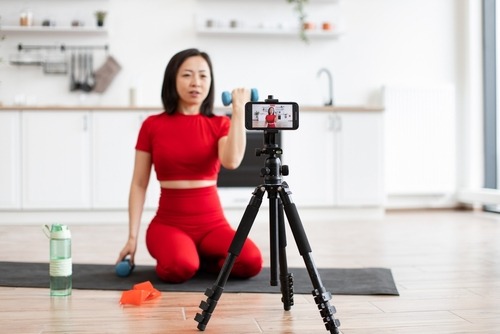

Because the most transformative fitness journeys often happen in rooms nobody else ever enters.
Introduction: The Question Nobody Wants to Ask Out Loud
You know the type. The gym photo posted at 6:47 a.m., the motivational caption, the carefully angled mirror shot catching just the right light. You scroll past it on your lunch break, coffee going cold beside you, and something small but persistent nudges at you. It’s not quite envy. It’s not quite admiration. It’s a question that sits uncomfortably in the back of your mind: “Am I really committed if I’m not posting about it?”
That question is more powerful than it looks. And honestly? It deserves a real answer.
We are living inside a fitness culture that has become deeply, almost inseparably, tangled with visibility. The message — subtle but constant — is that commitment needs witnesses to count. That transformation has to be documented to be real.
That motivation must be performed to be valid. And if you’re between 25 and 50, trying to build something meaningful with your health and your body, navigating that noise while also navigating real life... the pressure can feel genuinely suffocating.
But here’s what nobody talks about in the bright, filtered world of fitness content: the people building the most extraordinary, lasting changes are often the ones you never hear from. They’re training without an audience, fueling without a hashtag, and showing up without needing a single like to justify the effort. And quietly, steadily, they are becoming exactly who they decided to become.
This isn’t a story about rejecting social media. It’s about something far more interesting — and far more powerful. It’s about you, your fitness goals, and the remarkable thing that happens when effort no longer needs permission to exist.
The Scroll Trap — When the Feed Becomes the Fitness Standard
Let’s be honest about how this started. Social media, in its earliest fitness-adjacent days, genuinely served a purpose. People shared progress to find community. They posted workouts to stay accountable. They documented meals not to perform virtue, but because finding others on similar paths felt like discovering a kind of belonging that gyms didn’t always offer.
Something, however, shifted. Gradually and then all at once, the platform stopped being a tool for fitness goals and became the fitness goal itself. Follower counts and engagement rates crept into workout decisions. The question stopped being “What does my body need today?” and started becoming “What will this look like on camera?” Before long, motivation became synonymous with visibility — and visibility, by definition, needs an audience.
The psychological trap here is subtle but serious. When your sense of progress becomes anchored to external feedback — likes, comments, validation from strangers — you’ve essentially handed your internal compass to people who don’t know you, don’t train with you, and won’t show up for you when the alarm goes off at 5:30 a.m. on a cold Tuesday in February. That’s not empowerment. That’s outsourcing your confidence to an algorithm.
Furthermore, the social media fitness standard tends to celebrate extremes. The dramatic before-and-after. The 75-day challenge was completed publicly and loudly. The grueling workout was posted, a result of obvious exhaustion, to prove dedication. These are not inherently wrong — but they represent a very specific kind of fitness journey, and the overwhelming prevalence of that kind creates an invisible pressure: if your journey does not look like that, does it count?
It absolutely counts. And understanding why requires stepping back and asking a more fundamental question: What is fitness actually for?
Desire Is Real — Validation Is Optional
Here’s a distinction that gets lost in all the noise, and it matters enormously: wanting to be fit and needing others to see you being fit are two completely different things. One is a deeply human, entirely legitimate drive. The other is a learned dependence that can quietly erode the very confidence it claims to build.
Desire — the genuine, personal pull toward stronger, healthier, more capable — is not only acceptable. It’s essential. Nobody sustains long-term fitness goals through apathy. You need to want it. You need to feel some version of fire, whether that’s fierce ambition, quiet determination, or simply the steady refusal to give up on yourself. That fire is yours. It doesn’t need to be shown to anyone for it to be real.
Your desire doesn’t require a witness. It requires only your own honesty.
External validation, on the other hand, is a fundamentally unstable fuel source. The problem with building workout consistency without extreme motivation — and make no mistake, that’s the sustainable path — is that external validation feels motivating right up until it doesn’t.
A post that performs well can spike your energy for a day. But when engagement drops, or the comments dry up, or someone criticizes your form in the replies, what happens then? If your discipline lives inside the validation, it leaves with the validation.
This is actually one of the most well-documented patterns in behavioral psychology: the overjustification effect. When we add external rewards to an internally motivated behavior, the intrinsic motivation can weaken.
You started training because you loved how it made you feel. Then you started posting because sharing felt good. Then the posting became part of the practice — and somewhere along the way, you stopped being sure which part actually mattered more. Sound familiar?
Training without needing outside validation is not about isolationism or ego. It’s about protecting the original, honest reason you started. And when you protect that, something remarkable begins to happen.
What Quiet Discipline Actually Looks Like in Practice
Let’s get concrete here, because “quiet discipline” can sound romantic in theory and bewildering in practice. What does it actually look like, day to day, to commit to fitness goals in a way that doesn’t depend on public performance?
It looks like cooking meals on Sunday afternoon without announcing it. Not because sharing is wrong, but because the meal prep matters whether or not anyone knows it happened. It looks like choosing a workout time that fits your actual life rather than the hour with the best gym lighting. It looks like logging a personal best in a lift and letting the satisfaction of that achievement live entirely inside you — at least long enough for it to become yours before you share it with anyone.
Quiet discipline also looks like honesty in the hard moments. The sessions where you showed up tired, moved slowly, finished early, and still count it as a win. The days you swapped the planned workout for a walk because that’s what your body needed, without guilt and without explanation. The weeks where progress felt invisible but you continued anyway, trusting the process in the way that only becomes possible when your commitment isn’t dependent on someone else watching.
Building confidence through consistent workouts is not a linear, photogenic process. It is messy, gradual, and deeply personal. The confidence that emerges from showing up for yourself, unseen, is qualitatively different from the confidence that comes from external praise. One is borrowed. The other is built. And built things last in ways that borrowed things simply cannot.
Why quiet effort matters in fitness goes beyond philosophy, too. Research consistently shows that people who connect their exercise habits to intrinsic values — health, vitality, stress relief, self-respect — maintain those habits significantly longer than people motivated primarily by appearance or external approval. Quiet discipline isn’t just philosophically cleaner. It’s practically more effective.
The Myth That Commitment Must Be Loud
There is a persistent, pernicious myth embedded in modern fitness culture: that the loudest commitment is the most sincere. The person posting daily is working harder than the person who never posts at all. That silence implies a lack of effort, or perhaps a lack of results worth sharing.
This myth is not only wrong — it may actually be backward.
Consider what happens when effort becomes performance. Decision fatigue enters the picture. Energy that could flow into the workout itself now flows into the documentation of the workout — the angle, the caption, the timing, the response to comments. The mental bandwidth required to appear disciplined is siphoned away from actually being disciplined. Slowly, the performance can begin to substitute for the practice rather than complement it.
The most powerful transformations don’t happen under studio lights. They happen in the quiet, unglamorous repetition of daily choices.
Busting this myth also means confronting the uncomfortable truth that visible effort isn’t always the effort that counts most. The moment nobody sees — the 6 a.m. training session on a morning when every instinct said sleep in, the choice of the nutritious meal when the easy option was right there, the decision to keep the commitment to yourself even when the results feel slow — these are the moments that personal growth is actually made of. Not because they’re secret, but because they are chosen without any reward other than the act itself.
This is why building workout consistency without extreme motivation is not only possible but preferable. Extreme motivation is, by nature, temporary. It peaks, burns bright, and fades. Quiet discipline, anchored in daily decisions rather than daily emotion, outlasts every motivational spike. And over months and years, that compounding consistency is what creates the changes that actually last.
Building Your Internal Standard — A Practical Framework
So how do you actually build this? How do you cultivate the kind of internal standard that does not need external applause to remain standing? Let’s move from philosophy into practical territory, because knowing something in your mind and feeling it in your daily practice are two very different experiences.
Start by getting clear on your why — and not the Instagram version. Not the “because I want to look better in photos” why, but the deeper, more honest one. Why does your health matter to you right now, in your actual life? Is it energy? Longevity? Mental clarity? Showing up fully for people you love? Feeling at home in your own body? Write it down. Not for anyone else — just for you. That private document is the beginning of your internal compass.
Next, create metrics that live entirely outside social media. Progress in fitness goals can be measured in dozens of ways that have nothing to do with appearance or external feedback. Track your lifting numbers. Note how your resting heart rate changes over months.
Observe how your sleep quality shifts when you train consistently. Pay attention to your mood, your focus, and your energy levels at 3 p.m. These are real, meaningful, personal measurements of progress — and they belong to you alone.
Additionally, design accountability structures that don’t require an audience. A simple training log. A weekly check-in with one trusted friend. A private notes app where you record your workouts and weekly reflections.
Accountability is genuinely valuable — but it does not require broadcasting. The discipline of recording your own effort privately is itself a confidence-building act, because it says: my progress matters to me, whether or not it matters to anyone else.
Finally, practice the art of the internal celebration. When you hit a milestone — a new personal record, a week of consistent training, a month of honoring your nutrition goals — acknowledge it. Let yourself feel the satisfaction fully.
You don’t have to share it to validate it. In fact, sitting with the quiet pride of an achievement that belongs entirely to you is one of the most underrated confidence-building practices in fitness. It reinforces the message you keep sending yourself: I do this because I said I would. And I am someone who keeps their word.
When Sharing Is the Right Choice
Let’s be clear: this article is not a case against sharing your fitness journey. That would be both preachy and dishonest, because sharing can genuinely serve meaningful purposes — and dismissing those purposes entirely would miss a real part of the human experience.
Sharing fitness content can build a legitimate community. Online spaces exist where people with specific health challenges, training styles, or goals have found connection and support that genuinely improved their outcomes.
Accountability partnerships that include some form of sharing have helped countless people stay consistent. And creating fitness content as a form of service — to genuinely inspire others rather than to perform for validation — is a different thing entirely from the compulsive documentation this article is questioning.
The line worth drawing is between intentional sharing and compulsive sharing. Between sharing as a tool that serves your fitness goals and sharing as a dependency that becomes the goal itself. If you post a workout and feel genuinely good about it, regardless of how the post performs — if the training session was complete and meaningful before the camera appeared — that is healthy. If you feel the session only “counts” once it’s posted and responded to, that’s worth examining.
The invitation here is not to go dark. It’s to get honest about what role visibility actually plays in your practice. Does it add to your journey? Wonderful — use it intentionally. Does it drain you, pressure you, or quietly make you feel like your private effort is somehow less real? Then maybe some of that energy belongs back in your own hands.
The Long Game — Why Quiet Discipline Compounds Over Time
Here’s the thing about personal growth that the fitness industry rarely emphasizes, because it doesn’t make for particularly exciting content: most of it is slow. Genuinely, stubbornly, beautifully slow. The dramatic transformation happens in the background of a thousand unremarkable Tuesdays. And the people who stay in that long game — who keep showing up through the plateaus and the fatigue and the seasons when nothing visible seems to change — are almost never the loudest voices in the room.
Building confidence through consistent workouts is a cumulative process. Every session you complete — seen or unseen, fast or slow, brilliant or mediocre — deposits something into an account that nobody else can access or withdraw from. Over time, that account grows into something extraordinary: genuine self-trust.
The unshakeable knowledge that when you make a commitment to yourself, you follow through. Not because someone is watching. Not because the metrics are impressive. But because you said you would, and you are learning to trust that your word means something.
That self-trust ripples outward in ways unrelated to fitness. It changes how you approach challenges at work. It shifts how you navigate relationships. It quietly, persistently reshapes your identity — from someone who wants to be consistent to someone who simply is. And that identity shift, built in the private repetition of kept promises to yourself, is worth more than any follower count.
The long game doesn’t trend. But it transforms.
Why quiet effort matters in fitness is ultimately a question about what fitness is actually for. If it’s for appearances and approval, then visibility makes complete sense as the primary currency. But if it’s for the deeper, longer, richer project of becoming someone who genuinely thrives — physically, mentally, personally — then the quiet path is not a lesser option. It may be the most powerful one available.
Reclaiming the Practice — A Note on Starting Where You Are
If you’ve read this far and felt a quiet recognition — a sense of yes, this is what I’ve been feeling but couldn’t quite name — then here is what I want to say directly to you: you are not behind. You are not doing it wrong because your journey hasn’t been loud. You are not less committed because you’ve been building in private, or in silence, or in the small, unsexy repetitions of daily life without an audience.
Start where you are. Not where the fitness influencer’s journey started. Not where you think you should be. Right here, with the honest assessment of what you actually want and what you’re actually willing to do consistently — not dramatically, not perfectly, but consistently. That’s the seed of everything.
Your fitness goals don’t need to look like someone else’s to be legitimate. Training without needing outside validation is not a compromise — it is, in many ways, the highest form of commitment. Because it means you’re doing this for you. Not for the feed. Not for the transformation photo. Not for the validation of strangers. For the version of yourself you’re becoming, quietly, steadily, in rooms and on mornings and in moments nobody else will ever see.
Conclusion: The Most Powerful Gym Is the One Inside You
Here’s the paradox we started with, fully unwrapped: in a world that insists commitment must be visible to be real, the deepest commitment often looks like nothing at all from the outside. It looks like a regular person, living a regular life, making small, consistent, quiet choices that nobody documents and nobody applauds — and building, over time, something extraordinary.
Fitness, at its core, is not a performance. It is a practice. And like all genuine practices — meditation, craft, learning, care — it deepens in proportion to the sincerity you bring to it, not the audience you attract. The desire to be well, strong, and capable is entirely your own. Honor it on your own terms.
You don’t need permission to train without posting about it. You don’t need validation to call your effort real. You don’t need a platform to build something meaningful in your own body and life. The discipline that happens in private, in the unglamorous repetition of showing up for yourself, is not the lesser path. It's the path that most consistently leads somewhere worth going.
So here is the invitation, simple and sincere: show up. Not for the feed. Not for the before-and-after. Not for anyone’s approval or applause. Show up because you said you would. Show up because you deserve the version of yourself that consistent effort creates. Show up in the quiet, in the ordinary, in the unseen — and trust that the most transformative thing you can do is simply, persistently, keep going.
Nobody needs to see it. It’s already real.
The silent grind doesn’t need an audience. It needs only you.