Visit Innatefit1.com for exercise wear and equipment!!!
The Power of Portions: Creating Healthier Habits One Meal at a Time
Master healthy portion sizes and nutritional balance with practical, sustainable strategies. Learn serving size awareness and portion measurement tools to create healthier eating habits without restrictive dieting.
SELF-HELPHEALTHY LIFESTYLEFITNESS TIPSWEIGHT LOSS HEALTHNUTRITION AND RECOVERY
Joseph Battle
7/21/20267 min read

Your Gentle Entry Point to Sustainable Eating
Forget everything you have heard about restrictive diets and rigid meal plans. The real transformation in how you eat starts with something far simpler: awareness. Healthy portions should not be about deprivation or suffering through tiny meals that leave you hungry and frustrated.
Instead, portion awareness represents a fundamental shift in how you approach food—moving from unconscious eating to intentional choices that honor both your body’s needs and your lifestyle.
This shift is powerful precisely because it doesn’t demand perfection or extreme change. You will not be overhauling everything tomorrow. Rather, you're building a foundation of awareness that naturally leads to better nutrition balance without the drama.
Think of portion awareness as a compass rather than a rigid map. It points you in the right direction while still allowing flexibility and real-world adaptation. When you understand how much food your body actually needs—and how to recognize that amount without obsessive measuring—something remarkable happens. You regain control without feeling controlled.
You make choices from a place of knowledge rather than impulse. This approach respects your intelligence, your schedule, and your desire to actually enjoy eating. Starting with healthy portions is like learning to drive: at first you're conscious of every move, but eventually it becomes second nature.
What Portion Awareness Actually Means
Before diving into strategies, let's clear up the most common misunderstanding: portions and servings are not the same thing. A serving size is a standardized amount established by nutritional science—what you find on a food label.
A portion, by contrast, is the amount you choose to eat. This distinction matters enormously because it means portion awareness isn't about following a food label religiously. Instead, it's about understanding how your body responds to different amounts of food and adjusting accordingly.
Portion awareness directly influences three critical aspects of your daily experience: energy levels, satiety, and performance. When you eat balanced portions, your blood sugar remains stable throughout the day, preventing the energy crashes that send you reaching for sugary snacks by mid-afternoon.
Satiety—that satisfying feeling of being properly fed without being stuffed—depends largely on portion balance. Your stomach doesn't have an accurate, instant fullness sensor; it takes about 20 minutes for your brain to register that you're satisfied.
Eating mindfully, at a reasonable pace, and in appropriate portions gives that system time to work. Additionally, if you're active or exercise regularly, proper nutrition balance affects your workout performance, recovery, and strength gains.
Nutrition balance through portion awareness means ensuring your meals contain adequate protein for muscle maintenance and satiety, sufficient carbohydrates for energy and brain function, healthy fats for hormone production and nutrient absorption, and plenty of vegetables and whole foods for vitamins, minerals, and fiber. It's not about cutting out food groups or eating less overall—it's about proportional representation on your plate.
Three Simple Strategies for Building Balanced Plates
The hand method stands out as perhaps the easiest tool for measuring portions because it's always with you and requires no equipment. Your palm-sized amount of protein (roughly the size and thickness of your open palm) provides adequate protein for satiety and muscle support.
Your cupped hand of carbohydrates—whether that's rice, pasta, potatoes, or bread—supplies the energy your body craves. Two handfuls of vegetables fill your plate with nutrients and fiber while taking up space that promotes fullness.
Finally, your thumb-sized amount of healthy fats from olive oil, nuts, avocado, or fatty fish supports nutrient absorption and hormonal health. This method works because hand size typically scales with body size, making it naturally proportional across individuals.
The plate method offers another straightforward approach that works brilliantly for visual learners. Imagine your plate divided into four sections: half of it contains non-starchy vegetables like broccoli, spinach, bell peppers, or leafy greens; one quarter contains protein sources such as chicken, fish, eggs, tofu, or legumes; the remaining quarter holds carbohydrates like brown rice, sweet potatoes, whole grain bread, or quinoa.
This visual approach removes guesswork and creates a balanced diet without calculation. The beauty of this method is its flexibility—you're not restricted to specific foods, just proportions. One evening your protein might be grilled salmon; the next it's black beans. Your carbohydrate could be oatmeal at breakfast or farro at dinner.
The third strategy involves mindful awareness of serving sizes through simple recognition. Start noticing what reasonable portions look like: a serving of pasta is roughly a closed fist, a serving of cheese is about two dice stacked together, a serving of peanut butter is your thumb.
By building this visual vocabulary, you gradually internalize what balanced portions appear like without obsessive measuring. This approach builds competence and confidence because knowledge becomes embodied rather than something you must constantly reference.
Bringing Portions Into Your Real Life
The challenge isn't understanding portion balance in theory—it's applying it when you're rushing through breakfast before work, grabbing lunch between meetings, or cooking dinner when you're tired. Breakfast sets your nutritional tone for the day, so starting strong matters. A balanced breakfast includes protein to stabilize blood sugar and provide lasting fullness.
Rather than a bowl of cereal that leaves you hungry two hours later, pair carbohydrates with protein: eggs and toast, yogurt with granola and berries, or oatmeal with nuts and fruit. These combinations maintain energy and prevent the mid-morning energy crash that derails healthy choices.
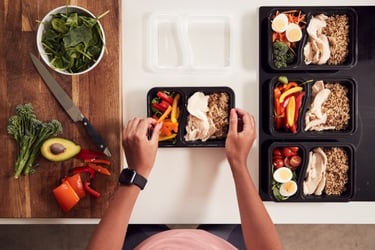
Lunch demands practical solutions because many people eat away from home. Bringing a prepared lunch gives you complete control over portions and nutrition balance. When eating out, you could split an entree with a companion, order a half-sized portion, or set aside half to take home before you begin eating.
Restaurant portions often exceed reasonable amounts by two or three times, so this strategy prevents unconscious overeating while still enjoying restaurant meals. Ask for extra vegetables instead of additional carbohydrates or fats. Request dressings and sauces on the side.
Dinner is when many people consume the largest portion of their day, and this is where the plate method particularly shines. By building dinner around that visual structure of half vegetables, quarter protein, quarter carbohydrates, you naturally create healthy portions without restriction. Snacking requires a slightly different approach—shifting from mindlessly eating from a package to portioning snacks into bowls or containers.
A balanced snack combines different nutrients: apple slices with almond butter, cheese with whole grain crackers, or hummus with vegetables. This prevents the common pattern of eating an entire bag of chips or cookies in one sitting.
The Mindset That Makes Change Stick
Here's what separates lasting change from temporary dieting: consistency beats perfection every single time. If you achieve balanced portions eighty percent of the time and eat imperfectly twenty percent of the time, that eighty-percent consistency compounds into real results over weeks and months.
Your body doesn't respond to a single perfect day or an indulgent meal—it responds to patterns. This means you can relax about occasional meals that don't align with balanced portions. A birthday celebration with cake, a casual dinner out with friends eating fries—these moments exist within a broader pattern of intentional choices.
Shifting your mindset from deprivation to awareness fundamentally changes your relationship with food. Instead of labeling foods as "good" or "bad," you recognize that all foods fit somewhere in your nutrition balance, and portion awareness determines whether a food supports your health goals or works against them.
You could include dessert at dinner, with portions of other foods adjusted accordingly. You could have pizza without guilt when you're aware of serving size and balance it with additional vegetables and protein. This flexible approach means you're not fighting constant cravings or white-knuckling through restrictions. Rather, you're making informed decisions from a place of agency.
Building lasting habits requires starting small and building gradually. Rather than overhauling every meal immediately, perhaps you try balanced portions at dinner for two weeks, then add lunch, then breakfast. This progressive approach prevents overwhelm and allows each change to solidify before adding the next challenge.
You might use portion measurement tools like your hands or the plate method for three weeks before these patterns become automatic. Over time, portion awareness becomes genuinely intuitive—you simply know, without calculation, whether your meal is balanced.
Your Confident First Step Forward
You possess everything needed to apply healthy portions today. No special equipment, no complicated calculations, no membership fees. Your hands contain portion measurement tools. Your plate provides the visual structure for nutrition balance.
Your growing awareness becomes the foundation for lasting change. The question isn't whether you can do this—it's whether you're ready to start.
Choose one meal. Tomorrow, or today if you're reading this at mealtime. Apply one strategy, whether that's the hand method, the plate method, or simply noticing if your portion feels balanced. Notice how you feel an hour later.
Did you have sustained energy? Did you feel satisfied without feeling stuffed? This single meal becomes your evidence that portion awareness works. From there, consistency multiplies into habits, and habits become your new normal.
You're not joining a program or making a dramatic declaration. You're simply becoming more aware, one meal at a time, and allowing that awareness to guide you toward the healthier version of yourself you already want to become.