Visit Innatefit1.com for exercise wear and equipment!!!
The Explosive Path to Trap Mastery: Building Serious Upper Back Strength Without Grinding Heavy Deadlifts
Build impressive trap strength with power snatches and hang cleans. Learn explosive pulling techniques, programming strategies, and progression methods to develop serious upper-back muscle without relying on heavy deadlifts.
SELF-HELPBEGINNERS FITNESS TIPSWORKOUTSCONFIDENCE BUILDINGFITNESS TIPSUPPER BACK WORKOUTS
Joseph Battle
7/6/20267 min read
Introduction
Let’s get straight to the point. You have probably heard it a thousand times: if you want big, strong traps, you need to deadlift heavy. That’s only half the story. The truth is, some of the most impressive trap development comes from explosive pulling movements that put your nervous system to work in ways deadlifts simply can’t match. Power snatches and hang cleans aren’t just assistance exercises—they are trap-building powerhouses that deliver results through dynamic, athletic movement patterns.
This article cuts through the noise and shows you exactly how to build serious trap strength without spending your days grinding maximal deadlifts. Whether you’re limited by equipment, prefer the explosive nature of Olympic lifts, or just want a fresh stimulus for your upper back, these movements deliver. Let’s talk strategy, technique, and the science behind why these lifts work so effectively for developing the trap.
Understanding the Trap Anatomy: Why These Lifts Matter
Before we get into programming, you need to understand what you are actually training. Your traps aren’t just the muscle you can see in the mirror—they are a complex, three-part system that includes the upper, middle, and lower trapezius. The upper traps are what most people think of when they talk about trap size, and they function primarily in scapular elevation and retraction. This is where power snatch and hang cleans excel. Have you ever seen the development on Li Fabin?
The difference between deadlifts and explosive pulling movements comes down to how they recruit these muscles. During a deadlift, your traps primarily act as stabilizers—preventing your shoulders from rounding and helping maintain a neutral spine. But during a power snatch or hang clean, your traps become dynamic movers.
They contract explosively during the shrug and the pull, engaging the nervous system in a way that builds both strength and power simultaneously. This makes these movements particularly effective for athletic power development and creating the neural adaptations that lead to serious muscle growth.
The Power Snatch: Your Trap-Building Alternative
The power snatch is a technical lift, but don’t let that intimidate you. For trap development, focus on the mechanics that matter most: the explosive extension, the shrug, and the aggressive pull under the bar. The snatch forces you to generate tremendous force through your entire posterior chain, with your traps playing a starring role in that production.
Here’s how it works mechanically. You start with the bar on the ground, feet hip-width apart, with your grip wider than shoulder-width. The initial pull is controlled—you are simply bringing the bar to your knees without aggressive hip involvement. Then, as the bar transitions past your knees, everything changes.
Your hips extend explosively, your back stays strong, and your traps engage in a powerful shrug. This is not a small movement—it’s an aggressive, full-body expression of force. Your upper back rises rapidly, your shoulders elevate toward your ears, and your traps fire harder than they would during almost any other movement.
What makes the snatch particularly effective for trap engagement is the timing. It’s not just pulling the bar up—you are explosively extending your body while simultaneously shrugging the bar toward your ears. The combination of these movements creates intense, rapid-fire muscle contractions that build both strength and size. Additionally, the catch position requires tremendous trap stability to control the bar overhead, adding another layer of engagement that deadlifts simply don’t provide.
The Hang Clean: Power Without Complexity
If the full power snatch feels too technical, the hang clean is your answer. It’s simpler to execute, equally effective for trap development, and allows you to focus more directly on the pulling mechanics that matter for upper-back strength. The hang clean starts with the bar already at your hips or knees, eliminating the complex technical demands of the snatch while preserving all the trap-building benefits.
Begin with the bar at your hips, feet hip-width apart, with a grip just outside shoulder-width. Your posture should be upright and athletic—chest up, core tight, weight distributed evenly through your feet. From here, initiate an aggressive hip extension, just like in the snatch.
Drive your hips forward and upward, generating explosive force through your legs and posterior chain. As your body extends, your traps activate in a powerful shrug, and you explosively pull the bar upward toward your shoulders.
The hang clean demands that your traps work harder throughout the pull because of starting from a more challenging position. Your traps cannot coast—they must engage immediately to help generate the force needed to accelerate the bar. Watch videos of the Great Pyrros Dimas.
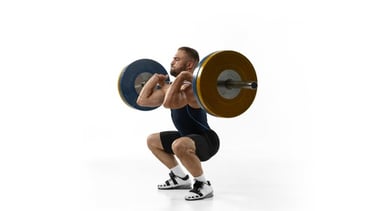
The catch position, where you receive the bar at your shoulders, also challenges your trap stability as you decelerate the weight and stabilize it during the front squat portion of the movement. This combination of explosive recruitment and sustained isometric tension creates an environment for serious muscle building and athletic power development.
Technical Breakdown: The Critical Positions and Movements
Let’s get granular about the technical positions that make these lifts effective for developing the trap. In both the power snatch and the hang clean, there are three critical phases: setup and initiation, explosive pull, and catch and stabilization. Understanding each phase helps you maximize trap engagement and minimize injury risk.
The setup and initiation phase sets the foundation. Your feet should be hip-width apart, your weight distributed 50/50 between your heels and toes. Your back angle should keep your shoulders slightly in front of the bar, and your core must be braced as if about to get punched. This position creates tension throughout your posterior chain, including your traps. Many lifters make the mistake of starting too upright or too reclined—find the middle ground where your mechanics feel athletic and explosive.
The explosive pull is where trap activation reaches its peak. As the bar reaches your knees in the snatch, or immediately in the hang clean, you transition from a controlled pull to an aggressive, full-body extension. Your quads and glutes drive forcefully, your hips extend rapidly, and your back remains tight. As your body extends, you initiate the shrug—this is critical.
The shrug is not a small shoulder roll; it’s an aggressive, explosive elevation of your shoulders toward your ears. Your traps contract powerfully during this movement, elevating your scapula and contributing to the force that accelerates the bar. Simultaneously pull the bar upward with your arms, creating a coordinated effort in which your traps, back, and arms work together.
The catch-and-stabilization phase demands sustained trap engagement. As you move under the bar and receive it at your shoulders, your traps work eccentrically to control the descent and concentrically to stabilize the bar overhead. This isometric hold develops the kind of functional trap strength that translates to real-world performance and impressive upper-back development.
Programming for Trap Dominance: Sets, Reps, and Frequency
Now that you understand why these lifts work, let’s talk about how to program them for maximum trap development. This is not guesswork—it is based on the principles of strength and hypertrophy training, applied specifically to explosive pulling movements.
For trap development, you want to emphasize both strength and power production. Start with a rep range of 3 to 6 reps per set, performed at moderate to heavy intensity—roughly 75 to 85 percent of your one-rep max. This range builds the strength foundation that allows your traps to work harder while also developing explosive power.
Perform these lifts 2 to 3 times per week, depending on your recovery capacity and overall training volume. If you are currently running a demanding program, twice weekly is sufficient. If you have a lighter schedule, three times weekly accelerates progress.
A practical approach involves pairing these lifts strategically. For instance, perform power snatches or hang cleans early in your session when your nervous system is fresh and you can execute with maximum explosiveness. Complete 4 to 5 sets of 3 to 5 reps, resting 2 to 3 minutes between sets.
This volume is sufficient to drive adaptation without creating excessive fatigue. As a secondary movement, you might add a shrug variation—barbell, trap bar, or dumbbell—performed for 3 to 4 sets of 6 to 8 reps. This secondary work amplifies trap engagement without overloading your nervous system.
Common programming mistakes include pulling too early in the movement—starting the shrug before your knees fully extend—or failing to complete the extension. These errors reduce trap engagement and limit your progress. Additionally, avoid the temptation to increase weight too quickly. Technical proficiency always precedes strength progression. Spend time perfecting your movement pattern, then gradually increase loading as your mechanics solidify.
Progression and Safety: Building Sustainably Without Injury
Strong traps without heavy deadlifts require a smart progression strategy. Rather than jumping from 135 pounds to 225 pounds overnight, increase weight by 5 to 10 pounds when you can complete all prescribed reps with excellent technical quality. This measured approach builds strength sustainably while minimizing the risk of injury.
Before loading heavy weights, invest time in movement preparation. Perform 5 to 10 minutes of dynamic stretching targeting your shoulders, hips, and thoracic spine. Follow this with lighter movement drills—empty-bar snatches or cleans, focusing on positioning and sequencing.
These warm-up drills activate your nervous system, reinforce technical patterns, and prepare your joints for the work ahead. Additionally, consider starting with dumbbell variations if the barbell feels intimidating. Dumbbell snatches and cleans offer similar neuromuscular benefits while reducing technical demands.
As you progress, scale movements intelligently. If the full catch position challenges you, practice the movement from hip height or knee height first. If the barbell feels unstable, begin with a PVC pipe or a lighter training bar. These modifications build competency and confidence without sacrificing effectiveness. Once you have established solid mechanics and work capacity at lighter loads, progress to heavier weights with confidence. Remember: patience beats impatience. Consistent, technically sound practice produces superior results over time.
Wrapping Up: The Explosive Truth About Trap Building
Here’s what you need to know moving forward. Building strong traps without heavy deadlifts is not just possible—it’s highly effective when you harness explosive pulling movements. Power snatches and hang cleans deliver results through dynamic muscle recruitment, athletic movement patterns, and consistent practice. These lifts challenge your nervous system, build serious upper-back strength, and produce visible muscle development when programmed intelligently.
Deadlifts remain a valuable tool for overall strength and back development, but they’re not your only option for trap growth. Combine the explosive power of snatches and cleans with smart programming, technical precision, and patient progression, and you should build impressive trap strength without grinding maximal deadlifts. The path forward is direct: master your movement patterns, apply consistent effort, and trust the process. Your traps will respond. Now get to work.