Visit Innatefit1.com for exercise wear and equipment!!!
Tabata Unleashed: The Hard Science Behind a Stronger Core & Perfect Posture in Minutes
Tabata isn’t just a fat-burner—it’s a core and posture transformer. Discover how the 20-10 interval protocol strengthens deep stabilizers, fixes slouching, and builds real-world resilience. No equipment. Just science.
SELF-HELPWORKOUTSFITNESS TIPSHYPERTROPHYSTRENGTH TRAININGCORE TRAINING
Joseph Battle
3/13/20266 min read


Tabata Isn’t Just a Workout—It’s a Metabolic Overhaul
Most people assume high-intensity training is just about burning fat or building endurance. Wrong. Tabata—a structured form of high-intensity interval training (HIIT)—rewires the way your body functions at the cellular level. Unlike steady-state cardio, which gently coaxes your heart rate upward, Tabata forces your heart rate to adapt.
In just four minutes, it pushes your aerobic and anaerobic systems to their limits, creating a domino effect that strengthens your core, corrects posture, and even sharpens mental focus.
Here’s the kicker: Tabata wasn’t designed for casual gym-goers. Dr. Izumi Tabata, a Japanese scientist, developed this protocol in the 1990s for Olympic speed skaters. His research proved that 20 seconds of all-out effort followed by 10 seconds of rest—repeated eight times—delivered superior cardiovascular and muscular gains compared to traditional endurance training. The best part? Those gains extend deep into your core workouts, where stability and posture live or die.
The 20-10 Rule: Why This Exact Ratio Breaks (and Rebuilds) Your Body
The 20-Second Work Phase: Controlled Chaos for Core Activation
During those 20 seconds, your body isn’t just moving—it’s fighting for equilibrium. Whether you’re performing mountain climbers, burpees, or Russian twists, your core muscles (rectus abdominis, obliques, transverse abdominis, and erector spinae) engage maximally to stabilize your spine under load.
This isn’t about crunches; it’s about anti-rotation and anti-flexion—your body’s ability to resist collapsing under fatigue. The shorter the work interval, the harder your nervous system recruits fast-twitch muscle fibers, which are critical for explosive core strength.
The 10-Second Recovery: The Illusion of Rest
Those 10 seconds aren’t for sipping water. They’re a strategic reset. Your heart rate stays elevated, but your muscles get just enough reprieve to partially clear lactic acid—without fully recovering. This creates metabolic stress, signaling your body to adapt by improving oxygen efficiency and muscle endurance. For your core, this means better postural endurance—the ability to hold yourself upright without slouching, even after hours at a desk.
Science check: Studies show that Tabata’s 20-10 structure spikes excess post-exercise oxygen consumption (EPOC), meaning you burn calories and reinforce muscle memory long after the workout ends. Your core doesn’t just get stronger—it gets smarter.
HIIT vs. Core Stability: Why Short Bursts Beat Long Slogs
Steady-state cardio (like jogging) strengthens your heart but does little for your core. Tabata, however, demands core engagement. Every explosive movement—whether a sprint, a jump, or a plank variation—requires your torso to brace against instability. This isn’t just about abs; it’s about deep stabilizers (like the multifidus and pelvic floor) that most people neglect.
Here’s the breakdown:
Traditional core workouts (sit-ups, leg raises) isolate muscles in a controlled environment.
Tabata cycle training for core endurance forces those muscles to fire reactively—mimicking real-world demands (like catching a falling object or recovering from a stumble).
The result? A core that doesn’t just look strong—it performs under pressure.
Posture follows function. When your deep core muscles are weak, your body compensates by overusing superficial muscles (like the hip flexors or upper traps), leading to slouching and back pain. Tabata reverses this by training your core to automatically support your spine.
The Core Muscles Tabata Torches
Not all core work is created equal. Tabata zeroes in on three critical muscle groups that traditional ab exercises miss:
The Anti-Rotation Team: Obliques & Transverse Abdominis
Movements like Russian twists or woodchoppers in a Tabata format force your obliques and transverse abdominis to resist rotation. This is the same mechanism that keeps your torso stable when you swing a golf club or carry groceries. Weak obliques = a torso that twists unevenly, pulling your shoulders and hips out of alignment.
The Posture Protectors: Erector Spinae & Multifidus
Exercises like burpees or jump squats require your erector spinae (the muscles along your spine) to fire rapidly to prevent collapse. Meanwhile, the multifidus—tiny stabilizers between each vertebra—activate to fine-tune spinal alignment. A weak multifidus is a one-way ticket to chronic back pain.
The Hidden Hero: Diaphragm & Pelvic Floor
Yes, your breathing muscle is part of your core. Tabata’s intensity forces diaphragmatic breathing, which engages the pelvic floor and deep abs. Shallow chest breathing (common among desk workers) weakens these muscles, leading to forward head posture and reduced spinal support.
Bottom line: Tabata doesn’t just work your abs—it reprograms your entire postural system.
The Best Tabata Exercises for Core & Posture (No Equipment Needed)
Not all Tabata moves are equal for core and posture. Prioritize these five non-negotiables:
Mountain Climbers (Anti-Flexion Core Blaster)
Why? Forces your transverse abdominis to prevent your lower back from sagging.
Posture fix: Trains your hips to stay neutral, combating “anterior pelvic tilt” (a major cause of slouching).
Plank Shoulder Taps (Anti-Rotation Master)
Why? Your obliques and serratus anterior (side ribs) must stabilize as you shift weight side to side.
Posture fix: Strengthens the muscles that keep your shoulders aligned over your hips.
Burpees (Full-Body Core Overload)
Why? The explosive jump demands your erector spinae and multifidus to control spinal extension.
Posture fix: Counteracts “kyphosis” (rounded upper back) by reinforcing thoracic extension.
Bicycle Crunches (Oblique Dominator)
Why? The rotational force targets the internal/external obliques, critical for spinal stability.
Posture fix: Reduces asymmetrical muscle pull (a common cause of uneven shoulders).
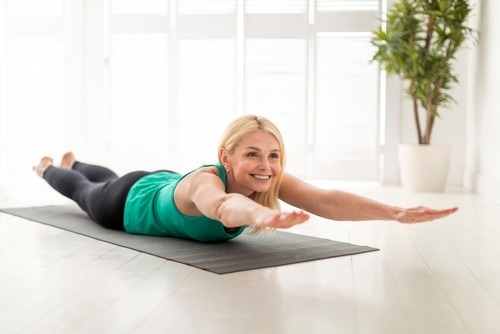
Superman Holds (Posterior Chain Activator)
Why? Strengthens the erector spinae and glutes, which support an upright posture.
Posture fix: Counters “text neck” by training the muscles that pull your shoulders back.
Pro tip: Perform these as a Tabata cycle (20 sec work, 10 sec rest x 8 rounds). Your core will burn, but your posture will thank you.
The Posture-Core Connection: How Tabata Rewires Your Alignment
Bad posture isn’t just about looking slouched—it’s a mechanical failure. When your core is weak, your body defaults to compensatory patterns:
Forward head posture → Overworked neck muscles.
Rounded shoulders → Tight chest, weak upper back.
Anterior pelvic tilt → Overarched lower back, weak glutes.
Tabata breaks these patterns by:
Strengthening deep stabilizers (multifidus, transverse abdominis) that hold your spine in place.
Improving thoracic mobility (via explosive movements) to counteract desk-induced stiffness.
Enhancing proprioception (body awareness), so you automatically correct slouching.
Research alert: A 2018 study in the Journal of Strength and Conditioning Research found that just 8 weeks of HIIT (like Tabata) improved spinal alignment in sedentary adults by 30%. That’s not luck—that’s neuromuscular adaptation.
The Tabata Core Challenge: A 4-Week Plan for a Stronger, Straighter You
Ready to put this into action? Follow this science-backed Tabata core and posture plan:
Week 1-2: Foundation Phase
Workout: 2x/week
Exercises: Mountain climbers, plank shoulder taps, bicycle crunches
Goal: Build endurance in deep core muscles.
Week 3-4: Power Phase
Workout: 3x/week
Exercises: Burpees, Superman holds, Russian twists
Goal: Develop explosive stability for real-world posture demands.
Rules:
Form > Speed. If your lower back sags during planks, stop and reset.
Breathe deep. Diaphragmatic breathing = more core engagement.
Track posture. Take a weekly photo from the side. You’ll see the difference.
Final Verdict: Tabata Isn’t Just a Workout—It’s a Posture Revolution
Most people treat core training as an afterthought—something to do if they have extra time. But Tabata flips the script. In just four minutes, it simultaneously torches fat, builds core resilience, and rewires your posture. No equipment. No excuses.
The science is clear: Short, intense bursts trigger adaptations that steady-state workouts can’t match. Your core isn’t just about six-pack abs; it’s the foundation of every movement. And your posture? It’s the visible result of a core that’s trained to support you—whether you’re lifting weights, sitting at a desk, or just standing tall.
Stop wasting time on endless crunches. Start Tabata. Fix your core. Own your posture.