Visit Innatefit1.com for exercise wear and equipment!!!

Straight Bars, Straight Facts: Why Moving Right Is the Only Way to Move Up
Master squat, bench, and deadlift form with this complete guide to bar path precision, proper mechanics for compound lifts, and assistance exercises for stronger lifts. Whether you are just starting out or hitting your first plateau, technique is the foundation that prevents injury and drives long-term strength gains. Stop guessing and start moving with purpose.
BEGINNERS FITNESS TIPSSELF-HELPWORKOUTSPERSONAL DEVELOPMENTFITNESS TIPSPOWERLIFTING TIPSSTRENGTH TRAINING
Joseph Battle
5/1/20268 min read

The three big lifts are not just exercises. They are skills. And like every skill worth having, they reward the people who take the time to do them right.
The Foundation Before the Weight — Why Technique Matters in Strength Training
Every beginner walks into the gym with the same goal: lift more weight. That ambition is not a problem. In fact, it is exactly what drives progress. The problem arises when that ambition skips the most important step — building a movement foundation that can actually support heavier loads over time. Without that foundation, more weight does not mean more progress. It means more risk.
Here is the honest truth about why technique matters in strength training: your body does not care how much weight is on the bar if your joints are stacked incorrectly, your spine is rounding under pressure, or your bar path is drifting in ways that multiply the force on structures never designed to handle it.
Proper mechanics are not a formality. They are the reason some lifters train for decades without serious injury while others get sidelined in their first year. The difference is rarely talent. It is almost always a technical discipline applied early and consistently.
Furthermore, technique is not something you add to your program once the weights get heavy. By that point, the bad habits are already wired in. Movement patterns are learned and reinforced through repetition, which means every rep you do — at every weight — is either teaching your body the right lesson or the wrong one. Starting with the correct form is not the slow path. It is the fastest path to strength that actually lasts. Affiliate Disclosure: This post may contain affiliate links; I may receive a small commission if you purchase through them, at no additional cost to you.
One Bar, Three Languages — Understanding the Big Three as Distinct Skills
The squat, bench press, and deadlift are often grouped together because they share a reputation: they are the big three compound lifts, the foundation of strength training programs worldwide. However, treating them as interchangeable or assuming that general “lifting tips” apply equally to all three is one of the most common mistakes beginners make. Each lift has its own bar path, its own mechanical demands, and its own set of technical checkpoints that must be respected.
Think of it this way: a surgeon, a pilot, and a chef all work with their hands. But the precision required, the tools used, and the consequences of error are completely different for each one. Similarly, the squat demands coordination of the hips, knees, and ankles during vertical loading. Wraps for the wrist.
The bench press requires shoulder blade control, wrist positioning, and a specific arc of movement. The deadlift requires a hip-hinge pattern, a neutral spine under significant tension, and deliberate bar-to-body proximity. Proper mechanics for compound lifts are not one-size-fits-all — they are lift-specific, and understanding that distinction is step one.
Additionally, while each lift has its own language, they share a grammar. Alignment, balance, control, and patience are universal principles that run through all three movements. Once you recognize those shared principles, you stop seeing three separate skills to master and start seeing one coherent system of movement intelligence.
The Squat — Depth, Drive, and the Art of Staying Stacked
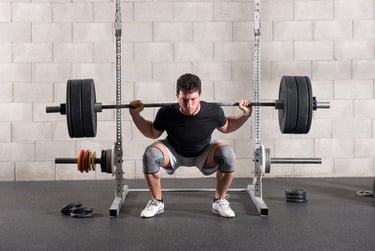
The squat is often called the king of lower-body exercises, and that title is earned. When performed with proper squat bench deadlift form, the squat recruits the quadriceps, hamstrings, glutes, adductors, and spinal erectors simultaneously while demanding significant balance and coordination.
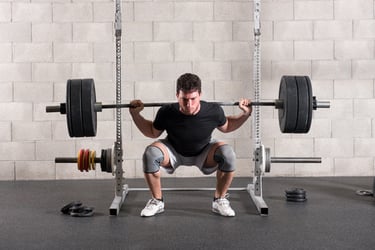
The bar path in a squat should be nearly vertical — traveling straight down and straight back up over the mid-foot. Any horizontal drift in that path signals a breakdown somewhere in the chain, whether that is a forward lean, a knee cave, or a loss of tension at the bottom.
Breaking the squat down into its key checkpoints makes it far more approachable. Start with bar placement — whether high bar or low bar, the bar should be centered on the upper back, not resting on the cervical spine.
Foot position varies by anatomy, but toes turned slightly out, and a shoulder-width-to-slightly-wider stance are a reliable starting point for most people. As you descend, the goal is to keep the chest up, the knees tracking over the toes, and the hips moving back and down simultaneously. Depth matters, but only depth achieved with a neutral spine and active tension throughout. Protect the lower back.
Moreover, the ascent is where many lifters lose control. The cue “drive through the floor” is a classic because it works — pushing the ground away, rather than thinking about standing up, keeps the hips and shoulders rising together.
When the hips shoot up faster than the shoulders, the torso pitches forward, the lower back takes over, and the lift becomes a good morning instead of a squat. Staying stacked — maintaining alignment from the bar to the feet — is not just good technique. It is the only technique that transfers safely to heavier loads.
The Bench Press — Controlled Chaos on a Flat Surface
The bench press looks simple. You lie down, you lower the bar, you press it up. That description is technically accurate and almost entirely useless for someone trying to build real pressing strength safely. The reality is that the bench press is a full-body lift disguised as an upper-body exercise, and its bar path demands precision that most beginners have never been coached on.
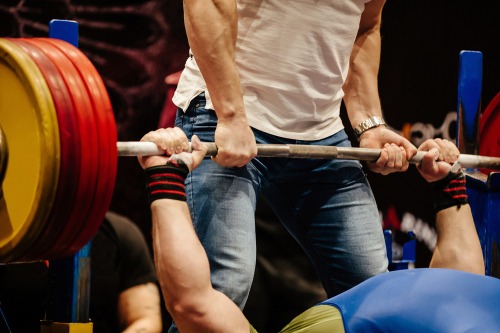
The bar path in a bench press is not straight down and straight up. It is a slight arc — the bar comes down toward the lower chest or upper abdomen and presses up and slightly back toward the rack. This arc is not a flaw; it is mechanics.
It follows the natural path of the shoulder joint through a pressing movement, reducing sheer force on the shoulder and keeping the load in the strongest position for the pecs, anterior deltoids, and triceps. When lifters press straight up instead of following the arc, they increase shoulder strain dramatically and cut the pecs out of a significant portion of the lift.
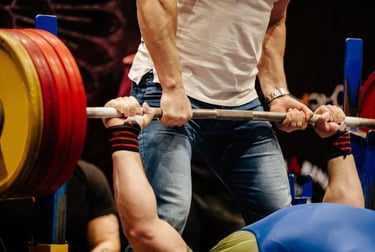
Additionally, the setup matters just as much as the movement itself. Foot position flat on the floor creates leg drive, which transfers force through a braced core and into the upper back, which should be retracted and depressed against the bench. Strong wrist protection.
The bar path lives on top of a foundation of tension — and that tension starts from the feet. Wrist positioning also plays a critical role: a neutral wrist (slightly extended, bar over the forearm bones) protects the joint and keeps the pressing force in a straight line. These are not advanced details. They are prerequisites for pressing safely at any weight.
The Deadlift — The Pull That Starts With a Push
The deadlift has a reputation for being dangerous. That reputation is not entirely fair, but it is not entirely wrong either. The deadlift is the most unforgiving of the big three when it comes to spinal mechanics, because it asks you to lift a heavy load from the floor while maintaining a neutral spine under maximum tension.
When the mechanics are right, it is one of the most effective full-body strength builders in existence. When the mechanics are wrong, it is one of the fastest ways to accumulate preventable lifting injuries.
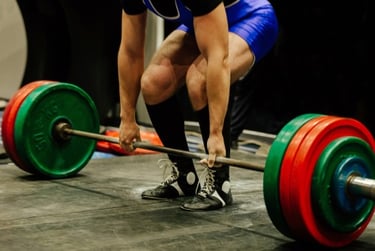
The bar path in a deadlift should be vertical and as close to the body as physically possible — ideally, the bar drags up the shins. Any horizontal distance between the bar and the body creates a moment arm, which multiplies the effective load on the lower back. This is why setup is everything in the deadlift.
The bar should be over the mid-foot, roughly an inch from the shins. The hips should be set — not squatted down to, not hiked high — in a position that puts the shins nearly vertical and the shoulders directly over or slightly in front of the bar. From there, the back locks in neutral, the lats engage to “protect the armpits,” and the lift begins not with a pull, but with a push of the floor.
Furthermore, the descent is not optional. A controlled, hip-hinge-led descent reinforces the same pattern that makes the lift safe on the way up, trains the posterior chain through its full range of motion, and builds the proprioceptive feedback that protects the spine under load. Dropping the bar after every rep might look powerful. What it actually does is skip the half of the movement that builds the most resilience.
Shared Principles — The Thread That Connects Every Bar
Across squatting, benching, and deadlifting, four principles recur: alignment, balance, control, and patience. These are not abstract values. They are functional requirements that show up in every rep of every lift, and recognizing them as a shared system is what transforms a beginner’s understanding of strength training from a collection of exercises into a coherent movement education.
Alignment means that joints, segments, and the bar are positioned relative to one another to distribute the load efficiently. In the squat, knees over toes, and bar over the mid-foot. In the bench, it is wrists over elbows. In the deadlift, the bar is over the mid-foot, and the shoulders are over the bar. Balance is the dynamic management of that alignment under load — it is not a static position, but a continuous adjustment.
Control is the intentional management of speed and tension throughout every phase of the lift, including the eccentric phase. And patience is the principle that ties the others together: the willingness to build competence before adding load, and to treat technique as a long-term investment rather than a short-term inconvenience.
Assistance Exercises for Stronger Lifts — Building the Engine Behind the Movement
No matter how well you understand the bar path of each lift, your technique will only be as good as the muscles and mobility that support it. This is where assistance exercises for stronger lifts become not just helpful but essential. Accessory work is not extra credit. It is the structural support that keeps your primary lifts improving safely over time.
For the squat, Bulgarian split squats, goblet squats, and hip flexor mobility work build the unilateral strength and hip range of motion that keep the bar path vertical and the knees tracking correctly. For the bench press, face pulls, band pull-aparts, and dumbbell rows build the posterior shoulder and upper back strength that keeps the scapulae stable and the shoulder joint protected through pressing.
For the deadlift, Romanian deadlifts, good mornings, and single-leg work build hamstring and glute strength through a hip hinge pattern while reinforcing the spinal mechanics the main lift demands.
Beyond individual lift support, general trunk training — planks, Pallof presses, carries — builds the 360-degree core stability that all three lifts rely on without always advertising. A strong core does not just protect the spine.
It transfers force more efficiently between the lower and upper body, which means more of your strength goes into the bar rather than leaking out through a soft midsection. Think of accessory work as the maintenance schedule for the machinery your big lifts depend on.
Technique Is Not the Ceiling — It Is the Floor
There is a persistent myth in strength training culture that technique is something you master once and then move past. In reality, technique is an ongoing practice that deepens with experience. Intermediate lifters revisit their mechanics constantly because heavier loads expose weaknesses that lighter weights concealed.
What felt solid at 135 pounds might fall apart at 225. That is not a failure. That is the normal progression of technical development, and it is exactly why building the habit of paying attention to technical matters early is so valuable.
Technique is the floor of your performance, not the ceiling. Every pound added to the bar is only as valuable as the quality of movement under it. A technically sound lift at a moderate weight builds more usable strength, more transferable muscle, and more durable joints than a sloppy max effort repeated often enough to cause injury. The strongest lifters in any gym are almost always the ones who move the best — not the ones who moved the most weight the fastest.
So treat the bar path as a priority from day one. Invest in coaching, video review, and intentional practice. Do the accessory work. Respect the shared principles. And trust that every rep done right is a deposit into a strength account that pays dividends for years. The weight will come. Move well first, and the weight will come.