Visit Innatefit1.com for exercise wear and equipment!!!

Squat Bar Path and Joint Integrity: Why Beginners and Intermediates Need a Clear Line for Safer Strength Development
Squat bar path affects joint integrity, balance, force distribution, and long-term strength. This guide explains common bar-path mistakes that harm joints, how poor mechanics lead to compensation, and how beginners and intermediates can build safer, stronger squats.
WOMEN'S HEALTHSELF-HELPBEGINNERS FITNESS TIPSWORKOUTSMEN'S HEALTHFITNESS TIPSSTRENGTH TRAINING
Joseph Battle
4/25/202612 min read
Intro
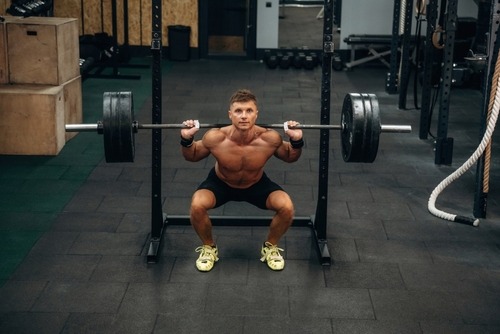
If you want stronger legs, a more stable squat, and fewer setbacks, stop treating the bar path like a small detail. It is not cosmetic. It is not a style choice. It is a major mechanical factor that affects how force moves through your ankles, knees, hips, and spine.
A clean squat bar path means the load travels in a controlled line over the middle of your foot. That line helps your body stay balanced, produce force efficiently, and protect Joint integrity under load. When the bar drifts too far forward, shifts side to side, or changes direction because your body is compensating, the stress does not disappear. It simply gets dumped into joints and tissues that were not meant to carry it.
For beginners and intermediate lifters, this matters even more. Early habits become long-term patterns. If your squat mechanics are sloppy now, they will usually get worse as the load gets heavier. That is why Bar path efficiency in squats should be treated as a foundation of strength development, not a minor coaching cue.
This article explains why bar path matters, how it affects joint stress, which compensation patterns usually show up when the line breaks down, and what to do to build safer, stronger mechanics that last. Affiliate Disclosure: Some product links are affiliate links, and I may be compensated if you buy through them, at no extra cost to you.
The Line That Controls the Lift
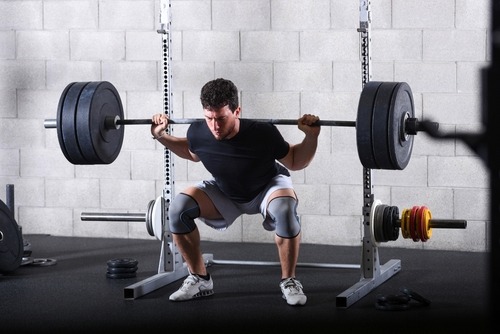
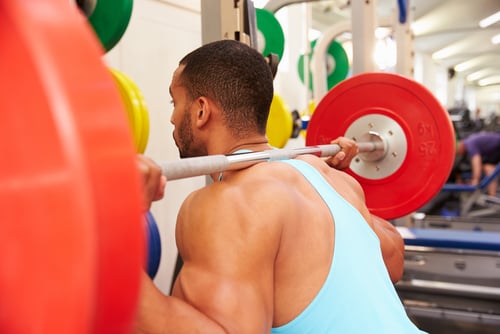
At its simplest, bar path refers to the route the barbell takes from the top of the squat to the bottom and back up again. In a strong, efficient squat, that route stays close to a vertical line over the midfoot. Not over the toes. Not back on the heels. Right over the middle of the foot, where balance and force production work best together.
This matters because the body has to keep the combined system of you plus the barbell balanced over your base of support. If the bar moves too far away from that base, your body has to make quick adjustments. Lifting belt.
Those adjustments usually show up as heel rise, knees collapsing inward, hips shooting back, chest falling forward, or one side taking more load than the other. In other words, poor bar path is not just an ugly rep. It is a signal that your body is scrambling to save the lift.
For beginners, this point is huge. Many people think squat problems begin with the knees or lower back. Often, the problem starts earlier with the bar's path itself. If that path is inconsistent, the rest of the body has to react. Therefore, the squat becomes less stable, less repeatable, and more stressful on joints.
A good squat should look controlled because it is controlled. The bar should not wander like a shopping cart with one bad wheel. It should move with purpose. When it does, force is transferred more cleanly through the lower body, and each joint can do its job without unnecessary compensation.
Learning objective
Understand that the squat bar path is a primary driver of balance, force transfer, and technical consistency.
Key ideas
A strong squat bar path stays close to a vertical line over the midfoot.
The bar path affects how the entire body organizes under load.
When the bar drifts, the joints and muscles must compensate.
Consistency in bar path supports safer strength development.
Why the Midfoot Matters More Than Most Lifters Realize
The midfoot is the body’s sweet spot for balance during a squat. Think of it as the center point where your system can stay stacked and efficient. When the bar remains over that point, the ankles, knees, hips, and torso can coordinate without unnecessary strain. The movement feels smoother because it is mechanically cleaner.
Now let’s make that concrete. If the bar drifts forward, your torso often leans more than it should, your heels may lift, and your knees may slide forward aggressively to stop you from tipping over. Heavy load support.
If the bar drifts backward, you may feel unstable, sit too far into the heels, or cut depth short. If the bar shifts laterally, one hip, knee, or ankle may bear more stress than the other. Each error changes the force distribution. That is where joint irritation begins.
This is also where Patellar tracking and squat path become important. The kneecap should move in a way that matches a stable lower-body pattern. When the bar path is off, the knee often follows poor mechanics.
The result can be excessive inward collapse of the knee, uneven loading, or repeated front-of-knee stress. That does not guarantee pain, but it raises the chance that discomfort and overuse will build over time.
In practical terms, a good bar path improves your ability to stay balanced without wasting energy. A bad one forces your body into survival mode. Therefore, if your squat feels shaky, inconsistent, or strangely exhausting for the load, the bar path should move to the top of your checklist.
Learning objective
Understand why the midfoot is the reference point for efficient squat mechanics and healthy force distribution.
Key ideas
Midfoot balance supports efficient force transfer.
Forward, backward, or lateral drift changes joint loading.
Patellar tracking and squat path are closely connected.
Better balance reduces wasted effort and technical breakdown.
Force Distribution: How the Bar Path Talks to Your Joints
Every squat sends force through a chain of joints. That chain includes the ankles, knees, hips, and spine. When the bar path is clean, the force is shared in a way the body can manage. When the path is messy, one area often gets overloaded while another underperforms. As a result, the movement becomes less efficient and riskier.
Start at the ankles. If the bar moves too far forward, the ankles need more forward motion to keep you from tipping. If you do not have that motion, the heels rise, or the body shifts elsewhere to compensate.
Move up to the knees, and the issue becomes even clearer. Poor tracking combined with unstable foot pressure can push the knees inward or overload the front of the joint. Then the hips may shoot back to rescue the rep, and the spine may flex or overextend to keep the bar from crashing. Shoes for squatting.
This is why Joint integrity is tied so closely to squat mechanics. Joint integrity does not mean staying perfectly still. It means maintaining positions and motion patterns that allow tissues to handle load safely and repeatedly. A clean squat bar path supports that. A wandering one asks your joints to absorb force in sloppy, unstable positions.
Moreover, the body remembers repeated stress. One rough rep may not create a problem. Fifty rough reps a week for months might. Chronic irritation often begins with repeated small errors, not dramatic disasters.
Therefore, when lifters ignore the bar path because they can still “finish the rep,” they often miss the bigger issue. The body may be tolerating the movement, but tolerance is not the same as good mechanics.
Learning objective
Understand how the bar path changes the way force travels through the kinetic chain.
Key ideas
A clean bar path helps distribute force across the ankles, knees, hips, and spine.
Drifted bar path overloads specific joints and tissues.
Joint integrity depends on stable, repeatable movement patterns.
Repeated small mechanical errors can add up to bigger problems.
Common Bar Path Mistakes That Harm Joints
This is where the conversation gets practical. There are several Common bar path mistakes that harm joints, and they show up often in beginners and intermediate lifters.
Forward Drift: The Sneaky Stress Multiplier
Forward drift is one of the most common squat faults. The bar moves in front of the midfoot, especially during the descent or as the lifter tries to stand up from the bottom. This often leads to excessive forward lean, heel rise, and a scramble to keep balance. Squat shoes.
That drift increases stress on the knees and lower back because the body must create extra leverage to pull the bar back into line. It also reduces power transfer from the hips and legs. In plain English, you work harder for a worse rep. Over time, this pattern can feed front-of-knee discomfort, back fatigue, and stalled progress.
Lateral Shift: When One Side Pays the Bill
A side-to-side shift is another major problem. The bar may tilt, or your body may move more onto one leg than the other. This can happen because of poor foot pressure, hip instability, uneven mobility, or a simple habit.
The issue is not just asymmetry in appearance. The issue is asymmetry in force. One knee may cave, one hip may rotate, and one side of the lower back may do more work than it should. That can create uneven wear and repeated irritation, especially when lifters keep adding load without fixing the root cause.
Vertical Collapse: Chest Drop and Hip Shoot
Sometimes the bar path looks vertical at first, but the body changes shape under it. The chest drops, the hips shoot up, and the lift turns into a squat-morning hybrid. The bar may still travel upward, but the mechanics are now far less efficient.
This usually means the lifter lost position, brace, or coordination. The result is more spinal loading, less balanced force through the legs, and a tougher lockout. It is also a common reason lifters miss reps they “should” have had.
Learning objective
Identify the bar path faults that most often reduce performance and increase joint stress.
Key ideas
Forward drift can increase knee and back stress.
Lateral shifts create uneven loading and instability.
A chest drop and a hip shoot change the lift into a less efficient pattern.
These faults often become worse as the load increases.
Compensation Patterns: What the Body Does When the Line Breaks
The body hates falling under load. So when your squat bar path breaks down, it will find a backup plan. The problem is that backup plans are usually expensive. They may save the rep, but they cost efficiency, position, and tissue tolerance. Squat book for guidance.
One common complication is knee valgus, in which the knees collapse inward. This can happen when the feet lose pressure, the hips fail to stabilize, or the body shifts to recover a wandering bar.
Another common pattern is heel rise, which often shows up when the bar drifts forward, and the ankles cannot manage the position. Excessive forward lean is also common, especially when the lifter cannot keep the bar stacked over the midfoot through the whole range of motion.
These are not random flaws. They are responses to a system losing its best leverage. That is why correcting the visible symptom alone often fails. Telling someone to “push the knees out” may help briefly, but if the bar still drifts and the foot pressure is still off, the problem returns. You must address the mechanics that caused the compensation in the first place.
Here are three practical problem chains:
Forward bar drift → heel rise → front-of-knee stress
Unstable foot pressure → knee valgus → poor patellar tracking and squat path
Hip shift to one side → lateral bar drift → uneven hip and low-back loading
These patterns reduce force output and repeatability. They also make progress frustrating. If every rep feels slightly different, your body cannot refine the movement well. Therefore, consistency in bar path is not just safer. It is also one of the fastest ways to build reliable strength.
Learning objective
Recognize that common squat faults are often compensation patterns caused by poor bar path control.
Key ideas
The body creates compensation patterns to avoid falling or missing the rep.
Knee valgus, heel rise, and forward lean often follow bar path errors.
Symptom-only coaching is often too shallow.
Fixing the bar's line improves the overall movement system.
Why Poor Bar Path Leads to Plateaus, Discomfort, and Injury Risk
Many lifters think progress stops because they need a new program, more volume, or more intensity. Sometimes they simply need a cleaner squat. If your bar path is inconsistent, your body wastes energy on corrections instead of force production. That means fewer efficient reps, slower technical progress, and less confidence under the bar. Guide for squats.
This matters for performance because strength is specific. You get stronger at what you repeat. If you repeat a squat pattern with drifting mechanics, your body becomes better at surviving a poor pattern, not better at producing efficient force. That is one reason stalled gains often show up even when effort is high. The engine is working hard, but the alignment is off.
Discomfort also tends to grow in this environment. Poor squat bar path can increase repeated stress at the knees, hips, lower back, and even the feet and ankles. Front-of-knee irritation may show up when the load repeatedly shifts into a poor tracking pattern. Low-back fatigue may build when the torso position keeps collapsing. Hip pinching may appear when one side consistently carries more load than the other.
Then there is the injury question. No single bar path error guarantees injury. However, repeated exposure to poor mechanics under load absolutely increases risk. Overuse issues often build quietly. Acute injuries can happen when a tired or unstable body runs out of room to compensate. Therefore, proper form is not about perfectionism. It is about reducing unnecessary risk while building strength that lasts.
Learning objective
Connect poor bar path to stalled progress, chronic discomfort, and greater injury risk.
Key ideas
Inconsistent mechanics waste energy and reduce force output.
Repeated poor reps reinforce poor movement patterns.
Joint discomfort often reflects repeated stress from compensation.
Injury risk rises when poor mechanics are loaded over time.
Fundamentals First: Why Early Mastery Beats Social Media Showmanship
Beginners and intermediates often get distracted by flashy squat content. High loads, unusual setups, and dramatic lifting styles can make basic form look boring. That is a mistake. Strength that lasts is built on fundamentals, not imitation.
A clean bar path is one of those fundamentals. Before chasing heavier weights, advanced variations, or a style that looks impressive on camera, lifters need control over the basic line of the bar. If that line is unstable, adding complexity usually multiplies problems rather than solving them.
There is also an important distinction between advanced technique variation and basic technical breakdown. Skilled lifters may use slight changes in torso angle or stance based on structure, goals, and bar position.
That does not mean a beginner should treat every deviation as acceptable. The beginner and intermediate priority is simple: keep the bar stacked over the midfoot, maintain pressure through the feet, and move in a way that keeps force organized through the joints.
This is where Bar path efficiency in squats becomes a long-term investment. Early mastery improves repeatability, confidence, and load tolerance. It also reduces the chance that bad habits become hard-coded. In short, doing the simple things well is not basic. It is strategic.
Learning objective
Understand why early technical mastery matters more than copying advanced lifting styles.
Key ideas
Beginners need clear fundamentals before variation.
Social media often rewards appearance, not sound mechanics.
Advanced lifters may use intentional variation; beginners usually need consistency.
Early mastery of the bar path supports long-term progress and resilience.
How to Build a Cleaner Bar Path Without Overcomplicating It
Improving squat mechanics does not require a PhD in biomechanics. It requires attention, consistency, and feedback. Start with one priority: keep the bar moving in a controlled line over the midfoot from top to bottom and back up.
First, build awareness. Film your squat from the side and from the front. From the side, check whether the bar tracks over the midfoot or drifts forward and backward. From the front, check whether the bar shifts left or right and whether one knee collapses inward. Video does not lie, and it is often the fastest way to catch patterns that you cannot feel in real time.
Second, clean up your setup. Make sure your feet are planted with full pressure across the tripod of the foot: heel, base of the big toe, and base of the little toe. Brace before you descend. Control the lowering phase instead of dropping into the hole and hoping for the best. Then drive up while keeping the bar balanced over the same pressure point.
Third, fix one issue at a time. If your main fault is forward drift, focus on foot pressure, bracing, and keeping the chest and hips rising together. If your main fault is lateral shift, pay attention to even stance pressure and control through both hips. If your main fault is heel rise, assess ankle motion and balance rather than forcing depth you cannot own.
Finally, progress is made only when the pattern stays consistent. More weight does not clean up poor mechanics. It usually exposes them. Therefore, earn progression with control. That is not a slow path. It is the fastest path that does not punish you later.
Learning objective
Provide practical, beginner-friendly steps for improving squat bar path and movement control.
Key ideas
Use video to assess the bar path from the side and front.
Build stable foot pressure and a solid brace.
Address the biggest fault first, rather than chasing every detail.
Add load only when the movement pattern remains clean.
Final Takeaway: The Best Squat Is the One Your Joints Can Trust
The squat is one of the best strength-training tools, but only when the mechanics support the goal. A strong squat bar path is not about looking polished for the gym floor. It is about keeping the load where your body can manage it best. That means better force transfer, better balance, and better protection for your joints.
When the bar stays in a clear line over the midfoot, the ankles, knees, hips, and spine can work together the way they should. When that line breaks down, compensation takes over. Then performance drops, discomfort rises, and long-term progress gets shaky. That is why Joint integrity, Patellar tracking, squat path, and overall movement quality belong in the same conversation.
If you are a beginner or intermediate lifter, this should give you a clear priority. Treat Bar path efficiency in squats as a foundation. Fix the line early. Build repeatable mechanics. Respect the difference between a completed rep and a sound rep. Strength that lasts is not built through random effort. It is built through disciplined movement.
So yes, the bar path matters. A lot. And if your goal is safer strength development, fewer setbacks, and better progress over time, it deserves your full attention.