Visit Innatefit1.com for exercise wear and equipment!!!
Seven Calorie-Rich Foods That Help Fitness Beginners Fuel Their Progress
Struggling to eat enough to support your workouts? Discover seven calorie-rich foods that help fitness beginners fuel training and recovery. Learn simple, balanced meal ideas using avocado, eggs, salmon, nut butters, and more — no processed snacks required. Practical advice on healthy ways to increase daily calories through whole foods.
SELF-HELPBEGINNERS FITNESS TIPSWORKOUTSNUTRITION AND RECOVERYSTRENGTH TRAININGHEALTH
Joseph Battle
6/17/20269 min read

Your simple, no-nonsense guide to eating enough without resorting to junk food
Why Eating Enough Is the Hidden Key to Fitness Progress
Starting a fitness routine is exciting. You show up, you put in the work, and you expect results. But here’s something many beginners discover a few weeks in: training hard while undereating is like trying to drive a car with an empty tank. The engine runs for a while, and then it sputters. You feel tired, your muscles ache longer than they should, and progress slows down even though you are doing everything right at the gym.
This is where calorie-rich foods become your best training partner. Calorie density simply means how many calories a food delivers per bite. When you’re a beginner exerciser, your body suddenly needs more fuel than it did before. Reaching that higher calorie target through healthy ways to increase daily calories — without eating processed snacks all day — can feel tricky at first.
The good news is that a handful of whole, real foods can close that gap efficiently. These seven foods are affordable, widely available, and easy to add to the meals you are already making. They also pair naturally with vegetables, fruits, whole grains, and lean proteins, so every meal stays balanced, not just calorie-stuffed.
Avocado — The Creamy Calorie Powerhouse
What It Is
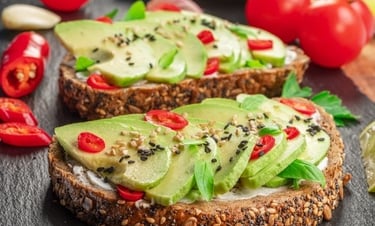
Avocado is a fruit — yes, technically a fruit — that grows on trees in warm climates. Unlike most fruits, it’s loaded with fat rather than sugar, which is exactly what gives it that rich, buttery texture. A single medium avocado weighs about 150 grams and delivers roughly 240 calories, making it one of the best calorie-rich foods for fitness beginners who need extra fuel without extra volume.
Why It Helps
The majority of avocado’s fat comes from oleic acid, the same heart-healthy fat found in olive oil. Beyond the calorie count, avocados provide potassium, folate, vitamin K, and vitamin E.
Potassium is particularly important for beginner exercisers because it supports muscle contractions and helps prevent cramping. Additionally, the fat in avocado slows digestion just enough to keep your energy levels steady rather than spiking and crashing.
How to Use It
The most practical pairing idea is dead simple: slice half an avocado onto a whole-grain turkey sandwich with lettuce and tomato. You get complex carbohydrates from the bread, lean protein from the turkey, healthy fats from the avocado, and micronutrients from the vegetables — all in one hand-held meal.
Alternatively, mash avocado onto whole-grain toast and top it with two fried eggs and sliced cherry tomatoes. For a post-workout option, blend half an avocado into a smoothie with banana, spinach, and milk. You won’t taste much of it, but your calorie count will rise meaningfully.
Whole Eggs — The Affordable All-in-One Fuel Source
What It Is
Eggs are one of the most studied foods in nutrition, and for good reason. A single large egg provides about 70 to 80 calories, and because they are so easy to prepare in dozens of ways, they’re a cornerstone of beginner nutrition plans worldwide. A carton of eggs is among the most affordable high-calorie whole foods at any grocery store, which makes them especially practical for people just building new eating habits.
Why It Helps
Each egg contains roughly six grams of complete protein, meaning it includes all the essential amino acids your muscles need to repair after training. The yolk specifically carries fat-soluble vitamins like A, D, and B12, along with choline, which supports brain and nerve function.
Because eggs are calorie-rich relative to their small size, eating two or three at a meal helps fitness beginners hit their daily energy targets without needing enormous portions. They also digest reasonably well before or after a workout.
How to Use It
A three-egg scramble with sautéed spinach, diced bell peppers, and black beans served alongside a slice of whole-grain toast creates a genuinely balanced meal. You have protein from the eggs, fiber, and additional protein from the beans, vitamins from the vegetables, and complex carbohydrates from the toast.
If breakfast isn’t your thing, a hard-boiled egg added to a grain bowl with roasted sweet potatoes, kale, and chickpeas works equally well. Eggs adapt to nearly any cuisine, so fitting them into meals you already enjoy is usually straightforward.
Nut Butters — Small Spoonfuls With Big Calorie Returns
What It Is
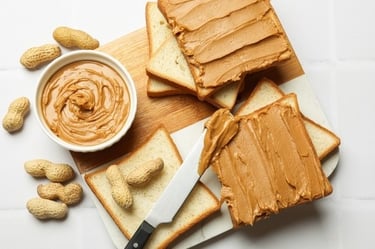
Nut butters — peanut butter, almond butter, cashew butter, and similar products — are made by grinding nuts into a thick paste. Two tablespoons of peanut butter, roughly one generous spoonful, contain about 190 calories.
That’s a significant amount of energy for a very small quantity of food. When looking for healthy ways to increase daily calories without eating large portions, nut butter consistently earns its spot among the best calorie-dense foods for fitness beginners.
Why It Helps
Nut butters provide a combination of healthy unsaturated fats, protein, and fiber. They also contain magnesium, which plays a role in muscle function and energy production — two things that matter quite a bit when training regularly.
The fat and protein together create a strong sense of fullness and sustained energy, so you’re not reaching for snacks an hour after eating. Choose nut butters made only from nuts, with possibly a small amount of salt. Avoid varieties with added sugars or partially hydrogenated oils.
How to Use It
Spread two tablespoons of almond butter on a whole grain wrap, then add banana slices, a drizzle of honey, and a handful of rolled oats for crunch. Roll it up, and you have a balanced pre-workout meal with carbohydrates for immediate energy, protein and fat for sustained fuel, and potassium from the banana.
Another easy option is to stir peanut butter into oatmeal cooked with milk, then top it with apple slices and a sprinkle of cinnamon. This combination supports balanced meals for beginner exercisers who want something warm, filling, and ready in under ten minutes.
Brown Rice — The Steady Energy Base Your Workouts Need
What It Is
Brown rice is simply white rice with its outer bran and germ layers intact. Those layers are where most of the fiber and nutrients live. A single cooked cup of brown rice provides around 215 calories, and because it’s a whole grain, it digests more slowly than white rice, delivering energy steadily rather than all at once.
Brown rice is widely available, inexpensive, and incredibly versatile, which is why it should be a staple in beginner nutrition plans across many different cultures and cuisines.
Why It Helps
Brown rice is primarily a carbohydrate source, and carbohydrates are your body’s preferred fuel during exercise. When you train, your muscles use stored carbohydrate (called glycogen) for energy. Eating enough carbs helps keep that glycogen tank filled so you can train with consistent effort over time.
Brown rice also provides B vitamins that support energy metabolism, as well as manganese and selenium. The fiber content supports digestive health and helps with steady blood sugar, both of which matter for maintaining energy throughout a training day.
How to Use It
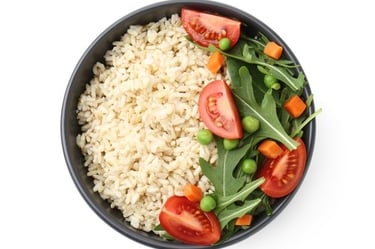
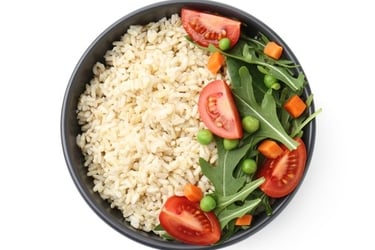
Build a simple grain bowl: start with a cup of cooked brown rice, add roasted broccoli and carrots, a portion of grilled chicken or baked salmon, and a drizzle of tahini thinned with lemon juice. This one-bowl meal checks every box for a balanced meal for beginner exercisers — whole-grain carbs, lean protein, healthy fat, and multiple vegetables.
Brown rice also works well as the base for a stir-fry with tofu, bok choy, snap peas, and a light soy-ginger sauce. Cooking a large batch on Sunday and storing it in the refrigerator means the base for several meals is already done.
Salmon — The Calorie-Dense Protein That Does Double Duty
What It Is
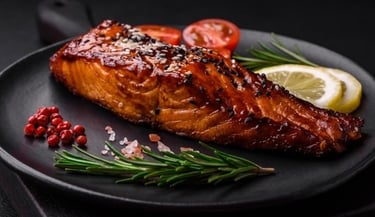
Salmon is a fatty fish that stands out from most protein sources because its fat content meaningfully boosts its calorie density. A 100-gram serving of cooked salmon delivers approximately 200 to 220 calories, compared to roughly 165 calories for the same serving of chicken breast.
That extra calorie load comes primarily from omega-3 fatty acids, a type of fat with a well-documented role in reducing inflammation. For fitness beginners, salmon is one of the best calorie-rich foods because it meets both calorie needs and supports recovery.
Why It Helps
Every serving of salmon provides around 20 to 25 grams of complete protein to support muscle repair, along with vitamin D, B12, and selenium. The omega-3 fats — specifically EPA and DHA — help reduce the muscle soreness and inflammation that often frustrates beginners in the first weeks of training. Research consistently shows that adequate omega-3 intake is associated with faster muscle recovery and reduced delayed-onset muscle soreness. Getting enough of these fats through food, rather than supplements, is a straightforward and effective strategy.
How to Use It
A baked salmon fillet served with a cup of cooked quinoa and a side of steamed asparagus dressed with olive oil and lemon is a classic, balanced dinner. Quinoa adds extra complete protein and complex carbs, while the asparagus brings folate and vitamin K. If time is tight, canned salmon works just as well nutritionally. Mix canned salmon with Greek yogurt, diced celery, and a squeeze of lemon, then serve it over whole-grain crackers or in a whole-wheat pita with arugula and sliced cucumber. This approach makes salmon accessible on even the busiest training days.
Olive Oil — The Easiest Calorie Upgrade for Any Meal
What It Is
Olive oil is pressed directly from olives, and it’s one of the most calorie-dense whole foods available. Just one tablespoon delivers around 120 calories — entirely from fat. Because it is a liquid, olive oil adds significant caloric value to a meal without adding any noticeable volume or requiring any extra preparation. In healthy ways to increase daily calories, olive oil is perhaps the most effortless upgrade a beginner can make: drizzle it on, stir it in, or use it to cook, and the calorie count of any meal rises quickly and cleanly.
Why It Helps
Olive oil’s primary fat is oleic acid, which supports heart health and reduces inflammation. It also contains polyphenols — plant compounds with antioxidant properties — that support overall health. For beginner exercisers who sometimes struggle to hit their calorie targets, olive oil serves as a reliable, neutral-tasting way to add energy to meals that are otherwise nutrient-dense but calorie-light. Because it pairs with virtually every type of food, it’s uniquely flexible compared to other high-calorie additions.
How to Use It
Toss roasted sweet potatoes, chickpeas, and zucchini in two tablespoons of olive oil before roasting. Serve the roasted vegetables over a whole grain like farro or barley, and add a side of Greek yogurt mixed with garlic and dill as a protein-rich sauce. This single meal can deliver 600 to 700 calories from whole foods alone. Another approach: cook scrambled eggs or sautéed greens in olive oil instead of a non-stick spray. The calorie difference between one tablespoon of oil and a spray is well over 100 calories, and those small additions compound meaningfully over the course of a full day of eating.
Whole Milk Greek Yogurt — The Thick, Tangy Calorie Builder
What It Is
Greek yogurt is made by straining regular yogurt to remove much of the liquid whey, leaving behind a thick, creamy product that is significantly higher in protein than standard yogurt. When made from whole milk, it also retains a higher fat content, making it more calorie-dense than low-fat versions.
A 200-gram serving of whole-milk Greek yogurt delivers roughly 190 to 210 calories and 15 to 20 grams of protein. For beginner nutrition, it's one of the most practical and balanced calorie-rich foods because it handles protein, fat, and calories all in one scoop.
Why It Helps
Greek yogurt provides calcium for bone health — relevant for anyone adding load-bearing exercise to their routine — along with B12, phosphorus, and beneficial probiotic bacteria that support gut health. The protein it delivers is high in leucine, an amino acid that plays a key role in triggering muscle protein synthesis after exercise.
Eating it within a few hours of training is a practical, evidence-backed way to support muscle repair. Full-fat versions also satisfy hunger more effectively than low-fat versions, which helps with meeting overall calorie targets throughout the day without constant snacking.
How to Use It
Layer a cup of whole milk Greek yogurt in a bowl with half a cup of rolled oats, a handful of mixed berries, a tablespoon of honey, and a sprinkle of chopped walnuts. This combination covers carbohydrates from the oats, protein and fat from the yogurt, antioxidants from the berries, and additional healthy fats and calories from the walnuts — a genuinely balanced meal for beginner exercisers that takes less than three minutes to assemble.
Greek yogurt also works as a base for savory sauces and dips, stirred into mashed sweet potatoes, or spooned over grain bowls as a creamy, protein-rich topping. Its versatility is a genuine asset when you're building new eating habits.
Putting It All Together — Your Simple Fueling Strategy Going Forward
These seven foods — avocado, whole eggs, nut butters, brown rice, salmon, olive oil, and whole milk Greek yogurt — share something important: each one adds meaningful calories through whole, minimally processed ingredients that your body can use efficiently. None of them requires complicated recipes or expensive grocery runs.
Together, they represent a practical toolkit for anyone navigating beginner nutrition while trying to support training, recovery, and steady energy simultaneously. The broader strategy is straightforward: build meals around a whole-grain base like brown rice, add a protein source like eggs or salmon, incorporate a calorie-rich, healthy fat like avocado or olive oil, and fill the rest of the plate with vegetables and fruit. That structure, repeated across two or three meals a day, consistently moves you toward the calorie targets your training demands.
As you continue building your fitness routine, remember that progress depends on what happens in the kitchen just as much as what happens in the gym. Eating enough is not a luxury — it’s a requirement for adaptation.
By rotating these best calorie-rich foods for fitness beginners into your weekly meals, you create the conditions your body needs to grow stronger, recover faster, and show up ready for the next session. Start with one or two of these foods this week, get comfortable with a few simple pairings, and build from there. Consistency with fueling, just like consistency with training, is what produces lasting results.