Visit Innatefit1.com for exercise wear and equipment!!!

From Stiff to Strong: How Movement-Based Fitness Restores Everyday Mobility
Discover how movement-based fitness restores everyday mobility and eliminates stiffness through natural movement patterns. Learn the seven foundational movements that build strength, coordination, and pain-free movement in daily life.
WOMEN'S HEALTHWORKOUTSHEALTHY LIFESTYLEMEN'S HEALTHFITNESS TIPSSTRENGTH TRAININGHEALTH
Joseph Battle
6/13/202613 min read


Introduction: The Stiffness Problem That Stretching Won’t Fix
You wake up, and your knees feel creaky. You bend down to pick something up, and your lower back protests. You try to reach overhead and feel a pulling sensation across your shoulders. This is the reality for millions of adults—a body that feels increasingly rigid, limited, and frustratingly disconnected from the simple movements that once came naturally. The common response is to hit the stretching routine, holding positions for 30 seconds, and hoping that tomorrow will feel better. Yet tomorrow arrives, and the stiffness remains.
Here’s what most people get wrong: stiffness is not primarily a flexibility problem—it’s a coordination and strength problem. Your muscles are not necessarily short; they’re weak, poorly controlled, and confused about how to work together through full ranges of motion. The solution is not more static stretching. Instead, the answer lies in movement-based fitness, a systematic approach to building strength and control through natural movement patterns that restore your body’s lost capability.
This article will guide you through the science and practice of movement-based fitness. You will understand why traditional stretching falls short, discover the seven foundational movement patterns that change how your body feels and functions, and learn exactly how to build these movements into your weekly routine. By the end, you’ll have a clear strategy for transforming stiffness into strength—and in doing so, restoring the everyday mobility that defines a truly capable, pain-free body.
Why Stretching Isn’t Enough: The Truth About Mobility and Stiffness
The stretching myth runs deep in fitness culture. The logic seems straightforward: if you feel stiff, your muscles must be tight, so you stretch them out. But consider this: when was the last time you felt significantly better after a stretching session? For most people, the answer is “not often.” The reason is fundamental: the brain restricts movement when muscles are weak or poorly coordinated, not just when they are shortned.
Think of your nervous system as a protective guardian. Its job is to keep you safe by limiting your movement to ranges where you have adequate strength and control. If your hip muscles are weak, your nervous system won’t allow your hips to move freely—it restricts them as a defense mechanism.
Stretching might temporarily lengthen a muscle, but if the underlying strength and control are not there, your nervous system will simply tighten everything back up. It’s like loosening a bolt on a bridge with a faulty foundation—the structure does not get safer; it just creates new problems.
Neuromuscular control is the missing ingredient in most mobility conversations. Your joints don’t just need to move through a range of motion; they need muscles that can stabilize and coordinate movement at every point along that range. This is where everyday mobility genuinely improves.
When your muscles are strong across multiple ranges and in different positions, your body no longer needs to restrict movement for safety. Instead, it grants you fluid, unrestricted access to the full capabilities your body was designed to have.
Moreover, the concept of controlled instability reframes how we should think about mobility work. Your joints are inherently unstable—that’s actually their strength. They are designed to move in many directions while muscles provide real-time stabilization. This is the opposite of how most fitness training treats the body.
Traditional strength training often locks you into stable, predictable positions. But everyday life demands that you move fluidly while coordinating multiple muscle groups. You bend while twisting. You step while reaching. You carry things while walking. These are movements that require strength in motion, not just strength in static positions.
When you train movement-based fitness, you’re teaching your muscles to provide support and stability across all the different positions your body encounters. This is why adults who practice varied movement patterns stop feeling stiff. Their bodies have regained the coordination and strength to move freely in three-dimensional space. The stiffness was not a flexibility problem—it was a control problem. Now that control has been restored.
The Seven Foundational Movement Patterns: Building Blocks for Restored Mobility
Every day mobility depends on your ability to execute specific natural movement patterns. These patterns appear repeatedly in daily life, yet most modern fitness routines neglect them. Understanding and practicing each pattern is essential for transforming stiffness into strength.
Controlled Lunges—Movement in the Sagittal Plane
A lunge is far more than a leg exercise. It’s a fundamental human movement that develops active mobility by forcing your body to coordinate multiple muscle groups while supporting your entire body weight in an asymmetrical position. Forward lunges, backward lunges, and angled lunges each demand different things from your nervous system.
When you step forward into a lunge, your rear leg lengthens while your front leg bends. This requires strength in both hip flexors and hip extensors simultaneously. Your core must stabilize your torso against the asymmetrical loading, and your ankles must adjust to maintain balance. This is why lunges are so valuable: they train your body to coordinate movement across an entire chain, from your feet to your spine.
In everyday life, lunging movements appear when you step onto a curb, reach for something on a low shelf, or step into a bathtub. Without the strength and coordination that lunges build, these simple tasks become either difficult or painful.
To integrate lunges into your routine, practice them at the beginning of strength sessions using bodyweight only, focusing on control and range of motion. As you build capability, you can increase the load with dumbbells or resistance bands. The key is to progress through the range of motion before adding weight—move deeper into each lunge while maintaining perfect control.
Backward lunges deserve special attention because they develop eccentric (lengthening) strength in the quads while requiring significant hip extension control. This combination of forces does not appear in many modern movement patterns, making it essential for restoring mobility that training has taken away.
Rotational Movements—Thoracic Spine Freedom
Your spine is designed for rotation, yet most people move through the world as if their spine were a rigid pole. Rotational movements that emphasize the thoracic spine (middle back) are essential for restoring the mobility that desk work and daily sitting steal away. These are not hip rotations—they’re rotations that originate from your mid-back while your lower spine stays relatively stable.
Thoracic rotation develops the muscles around your ribcage and mid-back while teaching your nervous system that rotation is safe and controlled. This translates directly to everyday tasks: turning to look over your shoulder while driving, reaching across your body to grab something, or rotating to pick something up.
Without thoracic rotation capability, your lower back compensates by rotating instead. This compensation pattern causes lower back pain and dramatically reduces your quality of movement.
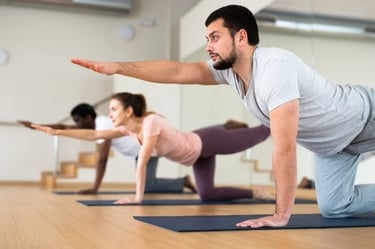
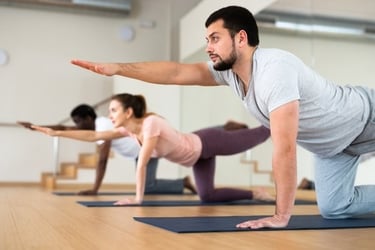
Practice thoracic rotations with the 90/90 stretch (lying on your side with hips and shoulders flexed at 90 degrees, rotating your chest toward the floor), rotating bird dogs (on hands and knees, reaching one arm across your body in a twisting motion), and half-kneeling wood chops (a lunge position where you rotate a held weight from high to low across your body).
Each variation trains rotation while maintaining a stable foundation. Incorporate these into your warm-up and into your main training. The improvements in everyday comfort come surprisingly quickly once your nervous system recognizes that rotation is controlled and safe.
Lateral Steps and Side Lunges—Frontal Plane Stability
Walking forward and backward is only one plane of motion. Frontal plane stability—the ability to move sideways while controlling your body weight—is equally important and dramatically undertrained. Most daily movement demands lateral stability: stepping around obstacles, stabilizing yourself when one foot is on an unstable surface, or simply walking across a crowded room while maintaining balance.
Side lunges and lateral steps directly train this plane. When you step to the side and bend one knee while keeping the other leg straight, you are loading one hip adductor (inner thigh) while stretching the other. Simultaneously, your lateral hip muscles work to control your pelvis. This combination of lengthening and strengthening in one movement builds functional capability that no amount of traditional stretching can replicate.
The practical applications are numerous: getting in and out of a car, walking on uneven terrain, or maintaining balance while reaching sideways. Without frontal plane stability, these movements feel unstable and potentially risky. Your nervous system responds by restricting movement.
To build this pattern, perform bodyweight side lunges, focusing on keeping your chest upright and moving purely laterally. Progress by adding load or increasing range. Include lateral steps in warm-ups and in your main training circuit at least twice weekly.
Ground Transitions—Coordinating Full-Body Movement
One of the most revealing movements you can assess is how someone gets down to the ground and back up. If getting down and up is stiff, difficult, or unstable, it signals that your body lacks coordination across multiple segments. Ground transitions—moving between standing, kneeling, sitting, and lying positions—demand integration of your entire kinetic chain.
A full ground transition involves moving from standing to a deep squat, to a lunge, to sitting, to lying on your back, and then reversing the entire sequence. This movement trains coordination through positions that traditional exercise rarely addresses. Your ankles, knees, hips, spine, and shoulders all must work together seamlessly. Without this integrated coordination, movements become fragmented and stiff.
Practically, ground transitions matter every single day. Sitting down, standing up, reaching under a couch, or playing with children all require the ability to transition on the ground. As aging progresses, the ability to move smoothly between heights becomes a genuine measure of functional independence.
To practice ground transitions, start with single-step movements—just moving from standing to a deep squat, holding it, and returning. Once that feels controlled, string movements together. Practice daily, even if just for five minutes. The improvements in everyday movement quality become obvious within weeks.
Carries—Loaded Movement for Real-World Strength
Carrying something while moving is perhaps the most functionally relevant strength exercise you can perform. Carries with varying loads and positions—suitcase carries (holding weight at your side), farmer’s carries (holding weight in both hands), and overhead carries (holding weight overhead)—train your body to stabilize under load while moving.
Unlike traditional strength exercises, where you move your body and keep the load stationary, carries require your body to stabilize while something external pulls on your kinetic chain. This is exactly what everyday life demands: carrying groceries, moving suitcases, holding children, or carrying work equipment. Each position develops different aspects of stability and control.
A suitcase carry (single-sided load) demands significant core and lateral stabilization as your body fights against the asymmetrical pull. A farmer’s carry distributes the load symmetrically but challenges your grip, forearms, and postural muscles to maintain uprightness.
An overhead carry (light load held overhead) demands shoulder stability and core control to prevent your lower back from arching. Incorporate different carry variations into your routine 2-3 times weekly. Start with conservative loads and focus on maintaining perfect posture throughout the movement. The strength gains and improved everyday stability develop remarkably fast.
Varied Reaching Patterns—Restoring Shoulder Mobility Through Motion
Your shoulders are designed to move in almost every direction: overhead, behind your body, across your chest, and at every angle in between. Yet most daily movement never challenges your shoulders through these full ranges. Varied reaching patterns that train overhead reaches, reaches behind your body, and reaches across your chest restore shoulder mobility that sedentary life has taken away.
Reaching overhead builds strength in the upper shoulder while your core stabilizes against the upward pull. Reaching behind your body (like reaching for a seatbelt) stretches and strengthens your anterior shoulder and chest muscles. Reaching across your body (like reaching for a seatbelt on the opposite side) develops shoulder and thoracic rotation together. Each reach pattern addresses specific ranges and movement qualities.
Practice these with light resistance bands, light dumbbells, or just your body weight. The goal is controlled movement through full ranges, not maximum weight. Include overhead reaches, banded pull-aparts (standing, pulling a band apart in front of your chest), and cross-body reaches in every training session. These patterns take minutes to practice but deliver dramatic improvements in shoulder comfort and overhead capability.
Stability Holds in Deep Ranges—Building Strength Where You Have Lost Access
Most training either completely avoids deep ranges of motion or moves through them too quickly. Stability holds in deep ranges—maintaining positions like deep squat holds, cossack squats, or deep lunge holds—train your nervous system to recognize deep ranges as safe while building strength where most people have lost access entirely.
A deep squat hold involves sitting in a full squat position (knees fully bent, hips low) and maintaining that position for time. This position has become foreign to most modern adults, yet it’s a natural resting position that humans have used for centuries. Your nervous system has literally forgotten how to be strong in this position. By practicing deep holds regularly, you are teaching your nervous system that deep ranges are safe and under control.
A cossack squat (a lateral squat that keeps one leg relatively straight while deeply bending the other) combines deep range with lateral stability. Holding a Cossack squat for 30-60 seconds dramatically improves lateral hip mobility and stability.
To practice these safely, start with shorter holds (15-20 seconds) in ranges where you can maintain control. Gradually increase duration and depth over weeks. Practice 2-3 times weekly. The improvements in everyday mobility and comfort are among the most noticeable of any single intervention.
Building a Movement-Based Routine: Practical Weekly Structure
Understanding individual movement patterns is essential, but integrating these patterns into a coherent routine is what transforms understanding into results. The structure of your training matters enormously. Your routine must weave these natural movement patterns into your week to build progressive strength and control.
A well-designed movement-based routine prioritizes these patterns as main movements, not afterthoughts. Instead of a 40-minute strength session with five minutes of mobility work, consider a 30-40-minute session in which these patterns are the main event.
A sample structure might look like this: a 10-minute warm-up emphasizing movement quality, followed by a circuit of 4-6 movement patterns rotated for 3-4 sets, finishing with loaded carries and stability holds.
Here’s a practical weekly structure: On Day 1, focus on ground transitions and lower-body lunges. Perform controlled lunges in multiple directions (forward, backward, at angles) as your primary strength work, incorporating ground transitions between sets.
On Day 2, emphasize thoracic rotation, overhead reaching, and carries. Practice rotational movements through full ranges, add overhead reaches with light resistance, and finish with Farmer’s carries. On Day 3, focus on lateral stability and frontal plane movement. Perform side lunges, lateral steps, and Cossack squats as main movements, finishing with suitcase carries.
Progressive overload in movement-based training differs from traditional strength training. Rather than adding weight first, you progress through deeper ranges, more challenging positions, or longer holds. Only after you have maximized range and control do you add external load. This approach ensures that your nervous system registers each movement as controlled and safe, preventing the restriction that occurs when load is added too early.
Additionally, consider when mobility work serves as a warm-up versus when it becomes the main event. Dynamic mobility (actively moving through the range of motion) is an effective warm-up before strength training.
However, deep holds and stability work often demand more nervous system resources and deserve dedicated time. You might warm up with 5-10 minutes of dynamic reaching, rotations, and lunges, then spend 20-30 minutes on your primary movement training. Once weekly, you might dedicate an entire session to exploring deep ranges and building capacity in neglected ranges—what might be called a “mobility priority” session.
Addressing Common Obstacles: Why Adults Feel Restricted
Understanding why adults experience stiffness in the first place helps clarify why movement-based training works so effectively. Most modern adults spend 6-8 hours daily sitting. This position shortens the hip flexors, weakens the glutes, restricts thoracic rotation, and trains the nervous system to believe that certain ranges are unnecessary. Over time, this isn’t just a flexibility issue—it is a learned restriction. Your brain has literally forgotten how to be strong in positions you no longer practice.
Additionally, many adults experienced injury at some point, and physical therapy—while necessary—often emphasizes stability in limited ranges. A person with a previous ankle sprain might have been told to avoid inversion (turning the ankle inward) for safety. If that restriction persists years after healing, the ankle no longer has strength in that range.
The restriction made sense during recovery, but it becomes problematic when it’s no longer necessary. Movement-based training systematically reexposes your nervous system to ranges it has learned to fear, rebuilding strength and trust.
Sedentary work also trains movement in only certain planes. Walking forward, sitting, and reaching in limited patterns means your body never develops full three-dimensional strength. The solution isn’t more of the same patterns; it is varied movement that challenges your body through all planes and positions.
The Transformation Timeline: What to Expect
Results from movement-based training come surprisingly quickly if you maintain consistency. Within the first two weeks, many people notice improved comfort in daily movement—less morning stiffness, easier bending, smoother transitions between positions. This happens because your nervous system rapidly reorganizes once it receives consistent signals that movement is safe and controlled.
After four weeks, noticeable improvements in strength become obvious. Tasks that were previously difficult—getting up from a low seat, reaching overhead, or bending down—become easier and feel more stable. Your body has developed genuine strength in ranges it had neglected.
By eight weeks of consistent practice, the transformation becomes undeniable. Every day, the mobility improves dramatically. Movement that previously felt restricted now feels fluid. Stiffness that seemed permanent proves to be reversible. This is not because you’ve become more flexible—it’s because your muscles have developed coordinated strength across every range your body actually uses.
Conclusion:
The central truth running through this article bears repeating: stiffness is resolved by developing real strength in natural movement patterns, not by passive stretching alone. When your muscles are strong and coordinated across the positions and ranges you actually need, your nervous system stops restricting movement. Stiffness disappears. Tasks become easier. Your body feels capable again.
The seven foundational patterns—controlled lunges, rotational movements, lateral steps, ground transitions, carries, varied reaches, and stability holds—are not arbitrary exercises. They’re the movements that recur throughout your day and your life. By building strength and control through these patterns, you’re directly improving the exact capabilities you need for daily function and long-term independence.
The path forward is straightforward: choose one movement pattern you have neglected most, and commit to practicing it 2-3 times weekly for the next month. If you spend most of your time sitting, ground transitions and deep holds might be your starting point. If you never rotate your thoracic spine, prioritize rotational movements.
If you have shoulder discomfort, begin with varied reaching patterns. One month of consistent practice will demonstrate what this article promises: that movement-based fitness genuinely restores the everyday mobility you thought you had lost.
The stiffness you feel isn’t permanent—it’s simply your nervous system protecting a body that has forgotten how to be strong in the positions life demands. Restore the strength, and the stiffness vanishes.